PCOS Weight Loss: Diet & Exercise Plan for Indian Women

If you have PCOS and feel like your body fights every attempt to lose weight, you are not imagining it. Polycystic Ovary Syndrome makes weight loss genuinely harder -- but it does not make it impossible. The women who succeed are not the ones who diet the hardest; they are the ones who target the real root cause: insulin resistance.
PCOS (also called PCOD) affects as many as 1 in 5 Indian women, and standard "eat less, move more" advice often fails them. This guide gives you a PCOS-specific, science-backed plan built for Indian food, Indian schedules, and Indian bodies -- so you can finally see the scale, your energy, and your symptoms move in the right direction.
Why PCOS Makes Weight Loss Harder
To lose weight with PCOS, you first have to understand why it is harder. Three linked factors are working against you:
Insulin resistance: Most women with PCOS have cells that respond poorly to insulin. The body compensates by producing more insulin, and high insulin promotes fat storage (especially around the belly) and makes fat loss stubborn.
Higher androgens: Elevated male hormones drive symptoms like irregular periods, acne, and hair changes, and shift fat storage toward the midsection.
Cravings and hunger: The insulin roller-coaster triggers strong cravings for sugar and refined carbs, making calorie control feel like a constant battle of willpower.
The #1 Lever: Fixing Insulin Resistance
Losing even 5-10% of your body weight can restore ovulation, regulate periods, and dramatically improve PCOS symptoms. The fastest route there is improving how your body handles carbohydrates -- not cutting them out entirely, but choosing them wisely and pairing them correctly.
The Three Rules That Do the Heavy Lifting
1. Protein at every meal: Protein blunts blood-sugar spikes and keeps you full. Aim for a palm-sized protein source at each meal (eggs, paneer, dal, curd, chicken, fish, soya).
2. Never eat "naked carbs": Always pair carbs with protein, fibre, or healthy fat. A plain roti or white rice alone spikes insulin; roti with dal and sabzi does not.
3. Fibre first: Start meals with a vegetable or salad. Fibre slows sugar absorption and improves insulin sensitivity over time.
The PCOS-Friendly Indian Diet
Foods to Build Your Plate Around
Protein: Eggs, paneer, curd/dahi, dal, rajma, chana, soya chunks, chicken, fish -- the foundation of every meal.
Smart carbs: Millets (bajra, jowar, ragi), oats, quinoa, brown rice, whole-wheat roti in moderate portions -- lower glycemic than white rice and maida.
Fibre-rich veg: Palak, methi, lauki, bhindi, beans, capsicum, and salads at every meal.
Healthy fats: Nuts, seeds (flax, pumpkin, chia), ghee in moderation, cold-pressed oils -- fats slow digestion and steady blood sugar.
Anti-inflammatory adds: Cinnamon (dalchini), fenugreek (methi), turmeric (haldi) -- traditionally used and may gently support insulin sensitivity.
Foods to Limit
Sample PCOS Indian Diet Plan (approx. 1500 kcal)
| Meal | What to Eat | Why It Works |
|---|---|---|
| Early Morning | Warm water with 1 tsp soaked methi seeds | May support insulin sensitivity |
| Breakfast | 2 moong dal chilla + mint chutney + 1 boiled egg | High protein, low glycemic start |
| Mid-Morning | Handful of nuts + 1 small fruit (apple/guava) | Fibre + fat blunts the sugar spike |
| Lunch | 1-2 bajra/jowar roti + dal + palak paneer + big salad | Balanced plate, fibre-first |
| Evening | Green tea or chaas + roasted chana | Protein snack, no sugar crash |
| Dinner (earlier is better) | Grilled chicken/fish or tofu + sauteed veg + small millet portion | Protein-led, lighter carbs at night |
Exercise Strategy for PCOS
Exercise is one of the most powerful tools for insulin sensitivity -- but with PCOS, the type matters. The goal is to build muscle and move consistently without spiking stress hormones.
Strength Training Is Your Priority
Muscle is where your body stores and burns glucose. More muscle means better insulin sensitivity, a faster resting metabolism, and easier fat loss. Strength training 3 times a week is the single highest-impact exercise choice for PCOS.
Monday / Wednesday / Friday: Full-body strength training (40-45 min) -- squats, lunges, glute bridges, rows, presses. Start with bodyweight and light dumbbells.
Tuesday / Thursday: Brisk walking (30-40 min) -- low-stress cardio that improves insulin sensitivity without spiking cortisol.
Daily: A 10-15 minute walk after your largest meal -- one of the simplest ways to blunt a post-meal blood-sugar spike.
Weekly: Yoga or stretching for stress and hormonal balance.
Lifestyle Factors That Change Everything
Sleep
Poor sleep directly worsens insulin resistance and increases hunger hormones. Aim for 7-8 hours. This is not optional with PCOS -- it is treatment.
Stress Management
Chronic stress keeps cortisol high, which feeds insulin resistance and belly fat. Even 10-15 minutes a day of deep breathing (pranayama), meditation, or a quiet walk meaningfully helps.
Supplements (Discuss With Your Doctor)
Realistic Timeline: What to Expect
| Timeframe | What Usually Happens |
|---|---|
| Week 1-2 | Fewer cravings, steadier energy, less bloating as blood sugar stabilises |
| Month 1-2 | 1-3 kg lost, better sleep, improved mood |
| Month 3-6 | Steady fat loss, more regular cycles for many women, visible changes |
| Month 6-12 | Significant symptom improvement, strength gains, sustainable new habits |
PCOS is not a life sentence of weight struggle. It is a signal from your body to eat, move, and rest in a way that respects your hormones -- and when you do, your body responds.
Common PCOS Weight Loss Mistakes
- Extreme calorie cutting: Raises cortisol and stalls progress. Moderate deficits win.
- Cardio only, no strength: Endless running without building muscle leaves insulin resistance unaddressed.
- Cutting carbs to zero: Unnecessary and hard to sustain. Smart, portioned carbs paired with protein work better.
- Ignoring sleep and stress: You cannot out-train poor sleep and chronic stress with PCOS.
- Chasing the scale daily: Progress with PCOS shows up in cycles, energy, and inches too -- not just weight.
Get a PCOS-Aware Fitness Plan
Coach Himanshu has helped many Indian women navigate weight loss with hormonal conditions, building nutrition and training plans that account for insulin resistance rather than ignoring it. The approach is practical, food-realistic, and designed for long-term results without burnout.
Take the free fitness assessment to get a plan tailored to your body and PCOS symptoms, or explore the coaching plans for ongoing guidance. You may also find our guides on thyroid and weight loss and fixing belly fat helpful, plus more on our fitness blog.
Frequently Asked Questions
Why is it so hard to lose weight with PCOS?
Most women with PCOS have insulin resistance, which means the body produces extra insulin. High insulin promotes fat storage (especially around the belly) and drives sugar cravings, so standard calorie-cutting alone often fails. The fix is to target insulin resistance directly through a protein-and-fibre-led diet, strength training, and good sleep -- once insulin improves, weight loss becomes much easier.
What is the best diet for PCOS weight loss in India?
A lower-glycemic, protein-forward Indian diet works best. Build meals around protein (eggs, dal, paneer, curd, chicken, fish, soya), swap white rice and maida for millets, oats, and whole-wheat in moderate portions, start every meal with vegetables or salad, and limit sugar, sweets, and fried snacks. The goal is steady blood sugar, not zero carbs or starvation.
How much weight do I need to lose to improve PCOS symptoms?
Research shows that losing just 5-10% of your body weight can meaningfully improve PCOS symptoms -- restoring more regular periods, improving fertility, and reducing insulin resistance. For a 70 kg woman, that is only 3.5-7 kg. You do not need a dramatic transformation to feel a real difference.
Which exercise is best for PCOS?
Strength training is the single most effective exercise for PCOS because muscle improves insulin sensitivity and metabolism. Aim for full-body strength work 3 times a week, plus brisk walking on other days and a short walk after meals. Avoid daily high-intensity marathon sessions, which can raise cortisol and worsen symptoms.
Can I get pregnant if I lose weight with PCOS?
For many women, modest weight loss and improved insulin sensitivity help restore ovulation and regular cycles, which can improve fertility. However, PCOS and fertility are individual and medical matters -- work with your gynaecologist for pregnancy planning. This plan supports your overall metabolic health, which is a strong foundation.
Do I need supplements or medication for PCOS weight loss?
Diet, exercise, sleep, and stress management are the foundation and often produce excellent results on their own. Some women benefit from supplements like inositol or vitamin D, or medication such as metformin, but these should only be taken under a doctor's guidance. Never self-prescribe -- confirm with your gynaecologist or endocrinologist.
Your PCOS does not define your limits -- it just changes the strategy. Start with one insulin-friendly meal and one strength session this week. For a plan built around your body, take the free assessment or explore more on the knowledge hub.
Related Articles

Navratri Vrat Without the Guesswork: Rules, Body Science and Workouts
Navratri fasting varies by family, region and community, so this blog lays out the vrat rules as commonly followed rather than as one fixed rulebook. It explains the main types of fast (full vrat, first-and-last-day, phalahar, one meal a day, nirjala) and who each suits physiologically. It covers what fasting does inside the body, both the benefits and the risks. It exposes vrat-food traps like sabudana and fried snacks, and busts myths about detox, sendha namak and weight loss. It then gives practical workout guidance for each fast type, plus warning signs for when to stop and see a doctor.

Desk Job Posture: How to Reduce Back Pain, Rounded Shoulders and Hip Stiffness
Long hours of sitting can contribute to stiffness, reduced activity and discomfort in the back, shoulders and hips—but there is no single perfect posture everyone must maintain. This evidence-based guide explains common desk-job posture concerns, including rounded shoulders, forward head posture and anterior pelvic tilt, while separating research-backed advice from common myths. Discover practical strength exercises, mobility routines, movement breaks and ergonomic adjustments to support better movement and back health. Learn how to build sustainable habits, what improvements to expect, and when professional medical evaluation is necessary.
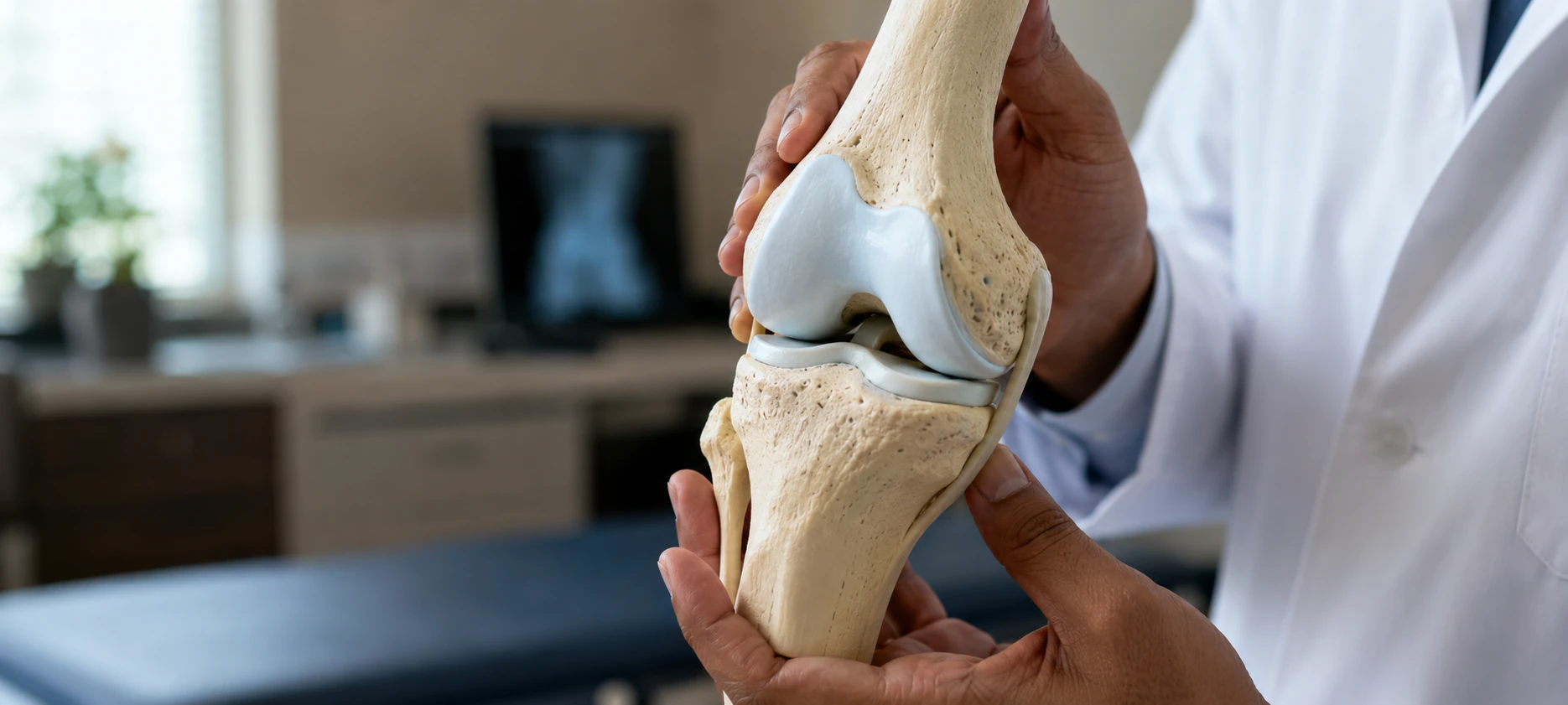
The Avascular Truth: Why Your Joints Take Months, Not Weeks, to Heal
Cartilage has almost no blood supply, so unlike muscle or skin it can't call in oxygen, nutrients, or repair cells fast — it relies on slow diffusion from joint fluid instead. This blog explains why that makes cartilage damage (like meniscus tears or worn knee cartilage) take months to partially heal, and sometimes never fully recover to its original quality. It covers what actually damages cartilage, the warning signs that mean "adjust training" rather than "push through," and busts common myths around joint cracking and glucosamine supplements. It closes with how Coach Himanshu builds training plans that protect joint longevity while still progressing strength and performance.
Ready to Start Your Fitness Journey?
Get personalized training and nutrition guidance from Coach Himanshu
Explore Plans