The Avascular Truth: Why Your Joints Take Months, Not Weeks, to Heal
Why Cartilage Heals So Slowly — And What It Means for Your Training
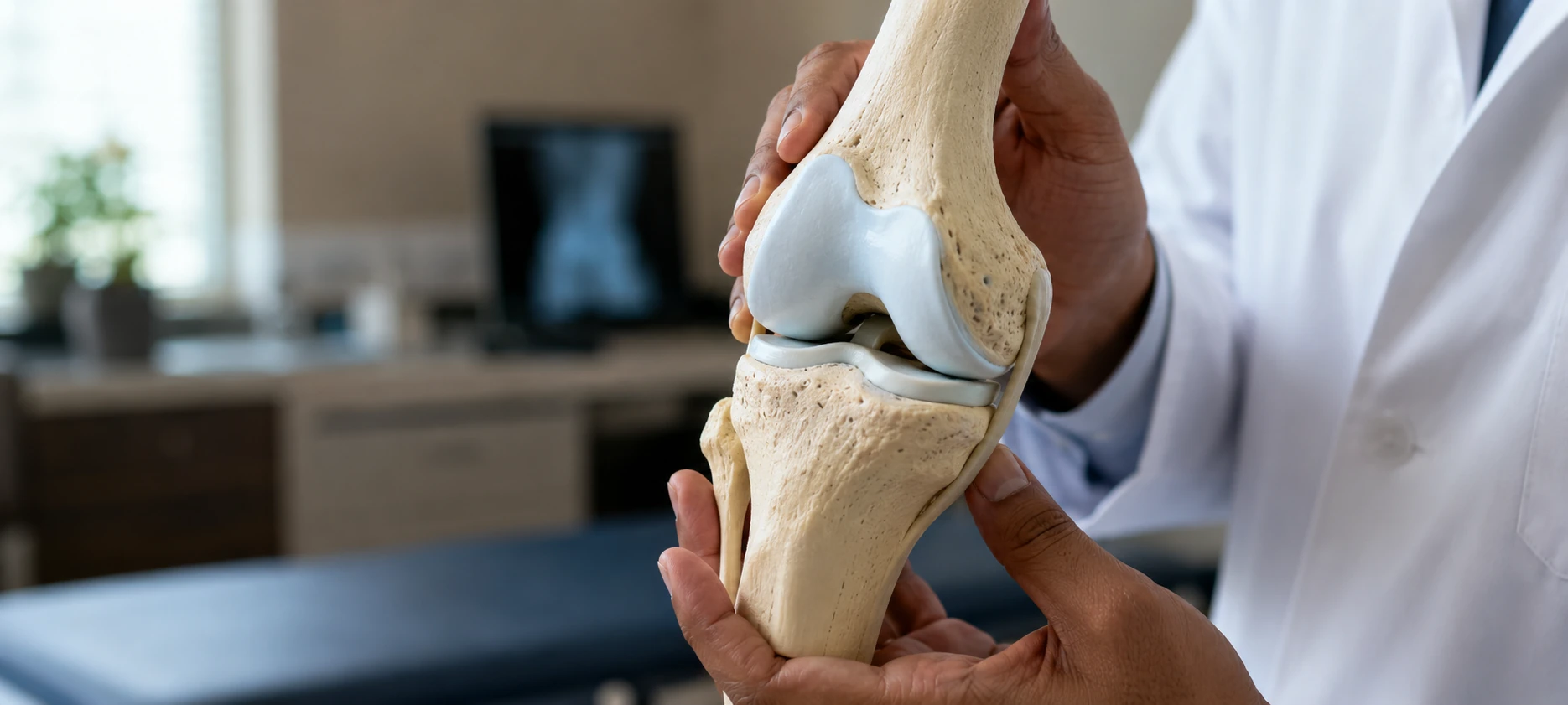
Cartilage has almost no blood supply. That single fact explains why a sprained ankle's ligament comes back in weeks, a cut heals in days, but a damaged knee cartilage can nag you for months — and sometimes never fully recovers. Here's the real physiology behind it, and what you can actually do about it.
Why cartilage barely heals on its own
Almost every tissue in your body repairs itself using blood: blood carries oxygen, nutrients, immune cells, and the signaling molecules that kick off repair. Muscle, skin, and bone are all richly supplied with blood vessels, which is exactly why they heal relatively fast. Before getting into why cartilage is the exception, it helps to know your own baseline — the Indian Food Calorie Calculator gives you real numbers on intake, which matters later when we get to what actually supports repair.
Cartilage is different. It is avascular — it has no blood vessels running through it at all. The cells that live inside cartilage (chondrocytes) are sparse, slow-dividing, and get their nutrients through slow diffusion from the synovial fluid that bathes the joint, not from a direct blood supply. There's no fast delivery system to bring in repair materials, and there's no efficient way to clear out damaged tissue either.
That's the core reason a torn meniscus or worn-down knee cartilage can take many months to partially recover, and why more severe cartilage damage often doesn't heal back to its original quality at all — the tissue that eventually forms is frequently a lower-quality fibrocartilage, not the original smooth hyaline cartilage.
How cartilage actually gets damaged in the first place
- Repetitive mechanical overload — years of load beyond what the joint can adapt to, common in untrained joints suddenly asked to do a lot (a new runner going from 0 to 20km a week, or a lifter who jumps loads too fast).
- Acute injury — a twist, a hard impact, or a bad landing that tears the meniscus or damages the articular cartilage directly.
- Muscle weakness around the joint — weak quads and glutes mean the knee joint itself absorbs more force that the surrounding muscles should be sharing.
- Age-related wear — natural cartilage thinning over decades, which is the basis of most osteoarthritis, though this is heavily influenced by activity levels, body weight, and muscular support, not age alone.
Why this actually matters if you lift or train
This is not a reason to fear training — the opposite. Because cartilage can't repair quickly once damaged, the smarter strategy is protecting the joint through how you train, rather than hoping supplements or rest will fix damage after the fact.
Signs your joint is asking for a change, not more grinding
- Sharp or pinching pain at a specific point in a movement (versus general muscle fatigue).
- Pain that persists or worsens for more than 48-72 hours after a session, rather than easing off.
- Swelling, clicking with pain, or a joint that feels unstable under load.
None of these mean "never train that joint again" — they mean it's time to adjust range of motion, load, or exercise selection, and get it looked at if it persists.
What genuinely helps cartilage and joint health
- Progressive, well-managed loading — cartilage actually responds to appropriate mechanical load by staying healthier over time; the problem is sudden spikes in load, not load itself.
- Strengthening the muscles around the joint — strong quads, glutes, and hip stabilizers reduce the raw force the cartilage itself has to absorb.
- Maintaining a healthy body weight — every extra kilogram of body weight translates into several kilograms of extra force through the knees with each step, which compounds over tens of thousands of steps a day.
- Adequate protein intake — cartilage repair, slow as it is, still depends on amino acids and Vitamin C as building blocks for collagen synthesis.
- Managing training volume like a variable, not a constant — deloading and varying movement patterns gives joints recovery windows that a blood-rich tissue like muscle doesn't need as urgently.
How Coach Himanshu builds training around joint longevity
Training hard and protecting your joints are not opposing goals — they only conflict when programming ignores individual joint history and just applies the same generic plan to everyone.
- Load progressed deliberately, not spiked, based on how your specific joints are responding week to week.
- Exercise selection adjusted around any joint that's flagging pain — modifying range, angle, or movement pattern instead of blindly pushing through it.
- Strength work targeted at the muscles that actually protect your knees, hips, and shoulders under load.
- Nutrition and protein targets set to actually support the slow, ongoing repair work your joints are doing in the background.
If you're training around a nagging joint issue, or just want a program built with your joint history in mind rather than a copy-pasted template, a personalized coaching plan is where that actually gets built into your programming.
Train hard without wrecking your joints
Get a program built around your actual joint history and recovery capacity — not a generic template.
Related Articles
Navratri Vrat Without the Guesswork: Rules, Body Science and Workouts
Navratri fasting varies by family, region and community, so this blog lays out the vrat rules as commonly followed rather than as one fixed rulebook. It explains the main types of fast (full vrat, first-and-last-day, phalahar, one meal a day, nirjala) and who each suits physiologically. It covers what fasting does inside the body, both the benefits and the risks. It exposes vrat-food traps like sabudana and fried snacks, and busts myths about detox, sendha namak and weight loss. It then gives practical workout guidance for each fast type, plus warning signs for when to stop and see a doctor.

Desk Job Posture: How to Reduce Back Pain, Rounded Shoulders and Hip Stiffness
Long hours of sitting can contribute to stiffness, reduced activity and discomfort in the back, shoulders and hips—but there is no single perfect posture everyone must maintain. This evidence-based guide explains common desk-job posture concerns, including rounded shoulders, forward head posture and anterior pelvic tilt, while separating research-backed advice from common myths. Discover practical strength exercises, mobility routines, movement breaks and ergonomic adjustments to support better movement and back health. Learn how to build sustainable habits, what improvements to expect, and when professional medical evaluation is necessary.

Fatty Liver Isn't Just an Alcohol Problem Anymore — Here's What It Actually Is
Fatty liver — alcoholic or non-alcoholic — is one of the most common findings on routine scans today, and one of the most misunderstood. This blog breaks down what it actually is, the difference between AFLD and NAFLD, why it happens, and the stage-by-stage question everyone actually wants answered: is it reversible? It covers exactly how diet and exercise reverse early-stage fatty liver, clears up common myths (thin people can't get it, detox teas cure it, symptoms are always obvious), and ends with how Coach Himanshu builds a fatty-liver-friendly diet and training plan around your real numbers.
Ready to Start Your Fitness Journey?
Get personalized training and nutrition guidance from Coach Himanshu
Explore Plans