Your Heart Can Fail Two Ways — Here's the Difference
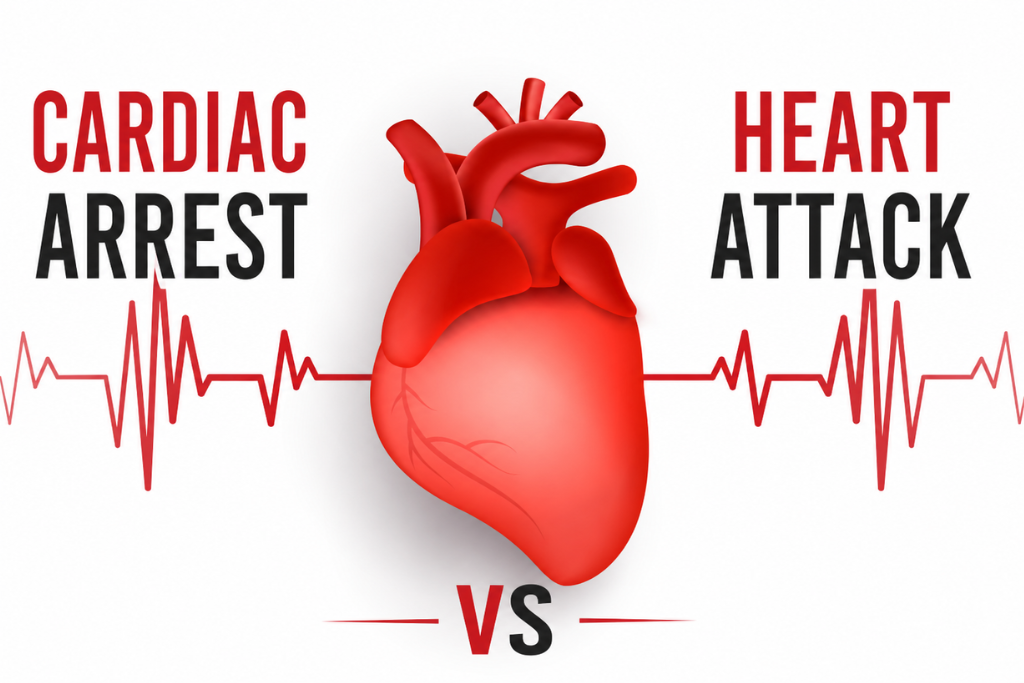
Cardiac Arrest vs Heart Attack: Why They Are NOT the Same
One is a plumbing problem. The other is an electrical problem. Confusing them can cost a life.
Every time a public figure collapses, the same headline does the rounds: "Heart Attack" — even when it was actually a cardiac arrest. The two get used as synonyms in casual conversation, in news reports, and even in gym locker-room talk. But medically, they are two very different events, with different causes, different warning signs, and different first-response actions.
If you train, coach, or simply want to know what to do in an emergency, this distinction isn't trivia — it can change how you respond in the first sixty seconds.
The One-Line Difference
Heart attack (myocardial infarction): a circulation problem. A blocked artery cuts off blood supply to part of the heart muscle, and that tissue starts to die if flow isn't restored.
Cardiac arrest: an electrical problem. The heart's rhythm goes haywire or stops altogether, so it no longer pumps blood to the brain and body. The person loses pulse and consciousness within seconds.
Side by Side
Heart Attack (MI)
- Caused by a blocked coronary artery
- Heart is usually still beating
- Symptoms can build over minutes, hours, even days
- Chest pain/pressure, arm or jaw pain, breathlessness, nausea, cold sweat
- Person is usually conscious and responsive
Cardiac Arrest
- Caused by an electrical malfunction (arrhythmia)
- Heart stops beating effectively
- Happens suddenly, often with no warning
- Collapse, no pulse, no normal breathing, unresponsive
- Person loses consciousness almost immediately
How They're Connected
Here's where the confusion usually starts: a heart attack can trigger a cardiac arrest. If the blocked artery causes enough damage or electrical disruption, the heart's rhythm can suddenly fail, tipping a heart attack into a cardiac arrest. But it isn't automatic — many heart attacks are survived without ever reaching cardiac arrest, and cardiac arrest can also happen for reasons that have nothing to do with a blocked artery, like severe electrolyte imbalance, drowning, electrocution, or a hard blow to the chest.
Quick Reference Table
| Feature | Heart Attack | Cardiac Arrest |
|---|---|---|
| Type of problem | Circulation (blockage) | Electrical (rhythm) |
| Heart still beating? | Usually, yes | No / ineffectively |
| Onset | Can be gradual | Sudden, no warning |
| Consciousness | Usually conscious | Loses consciousness fast |
| Immediate action | Call emergency services, get to hospital | CPR + AED immediately |
What This Means for Your Training
If you're coaching clients or training yourself — especially anyone over 35, anyone with a family history of heart disease, or anyone returning to exercise after a long break — this isn't about fear, it's about respect for the organ that's doing all the work. Warning signs like unusual breathlessness on exertion, chest discomfort, or unexplained fatigue during a session are never something to "push through." Get it checked. A pre-exercise medical clearance for at-risk individuals isn't overcautious coaching — it's basic due diligence.
This is also exactly why we don't run a "no pain no gain" culture. Programming that respects cardiovascular health, proper warm-ups, and progressive load isn't the boring option — it's the one that keeps you training for decades instead of one dramatic season.
Sources referenced: American Heart Association, UCLA Health, Mass General Brigham, Riverside Cardiology. This article is for educational purposes and is not a substitute for medical diagnosis or emergency care. If you or someone near you shows signs of a heart attack or cardiac arrest, contact emergency services immediately.
Nutrition & Training: Your Best Defense
Here's the part that should actually change how you train: most heart attacks are not random bad luck — they build up over years through high blood pressure, poor cholesterol, excess body fat, and a sedentary lifestyle. Which means the same diet and training you're already doing (or should be doing) for your physique goals is also, quietly, protecting your heart.
Getting your calories right is the starting point. Not eating blind, not guessing — actually knowing your numbers. If you haven't worked yours out yet, run them through the free calorie calculator and build your nutrition around real data instead of assumptions.
On the nutrition side, don't ignore the fats that actually help you — fish oil has solid evidence behind it for supporting heart health, lowering triglycerides, and reducing inflammation. It's one of the few supplements actually worth having in your routine.
And on the training side, consistency beats every shortcut. If you're relying on quick fixes instead of building real habits, it's worth understanding what those shortcuts actually do and don't do — read the truth about liposuction before you consider one over the other. A structured, progressive training plan will always do more for your long-term heart health than a one-time procedure. If you want that structure built for you, check out my plans.
Train Smart. Train Safe. Train With Science.
Get a coaching plan built around real physiology — not gym myths.
Related Articles

Navratri Vrat Without the Guesswork: Rules, Body Science and Workouts
Navratri fasting varies by family, region and community, so this blog lays out the vrat rules as commonly followed rather than as one fixed rulebook. It explains the main types of fast (full vrat, first-and-last-day, phalahar, one meal a day, nirjala) and who each suits physiologically. It covers what fasting does inside the body, both the benefits and the risks. It exposes vrat-food traps like sabudana and fried snacks, and busts myths about detox, sendha namak and weight loss. It then gives practical workout guidance for each fast type, plus warning signs for when to stop and see a doctor.

Desk Job Posture: How to Reduce Back Pain, Rounded Shoulders and Hip Stiffness
Long hours of sitting can contribute to stiffness, reduced activity and discomfort in the back, shoulders and hips—but there is no single perfect posture everyone must maintain. This evidence-based guide explains common desk-job posture concerns, including rounded shoulders, forward head posture and anterior pelvic tilt, while separating research-backed advice from common myths. Discover practical strength exercises, mobility routines, movement breaks and ergonomic adjustments to support better movement and back health. Learn how to build sustainable habits, what improvements to expect, and when professional medical evaluation is necessary.
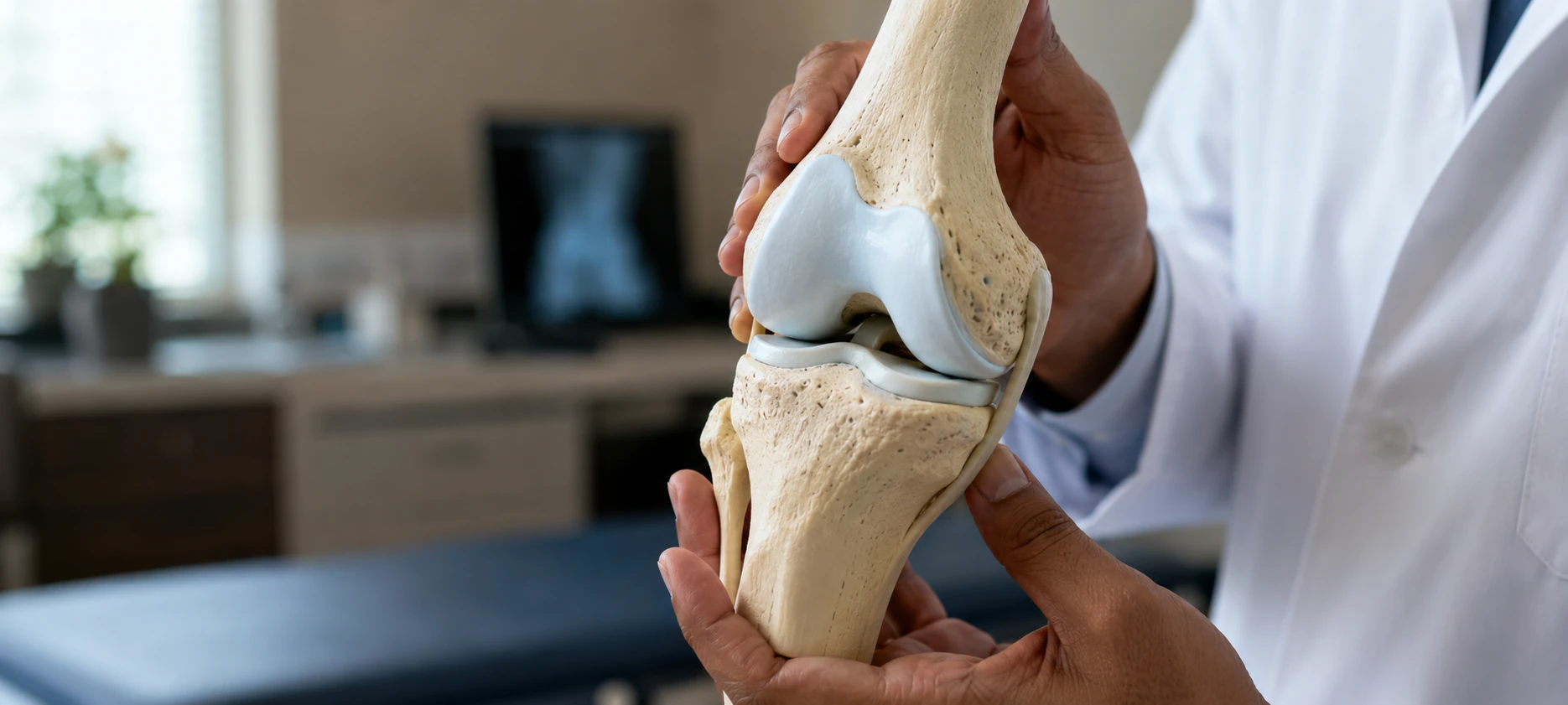
The Avascular Truth: Why Your Joints Take Months, Not Weeks, to Heal
Cartilage has almost no blood supply, so unlike muscle or skin it can't call in oxygen, nutrients, or repair cells fast — it relies on slow diffusion from joint fluid instead. This blog explains why that makes cartilage damage (like meniscus tears or worn knee cartilage) take months to partially heal, and sometimes never fully recover to its original quality. It covers what actually damages cartilage, the warning signs that mean "adjust training" rather than "push through," and busts common myths around joint cracking and glucosamine supplements. It closes with how Coach Himanshu builds training plans that protect joint longevity while still progressing strength and performance.
Ready to Start Your Fitness Journey?
Get personalized training and nutrition guidance from Coach Himanshu
Explore Plans