The Truth About Liposuction: Fat Loss vs Fat Removal

Liposuction Is Not Weight Loss Surgery — The Science-Backed Truth
"Ek baar liposuction kara lo, permanent fat loss ho jayega, phir diet aur exercise ki zarurat hi nahi padegi."
You've heard some version of this. Usually followed, a few years later, by the same person asking why the fat came back. This isn't a rare outcome — it's the predictable result of misunderstanding what the procedure is actually for.
Liposuction is one of the most misunderstood procedures in aesthetics. It's marketed and talked about like a shortcut to permanent fat loss. It isn't. Here's what it actually does, and why skipping the "boring" fundamentals afterward undoes the results.
What Liposuction Actually Is
Liposuction is a body contouring procedure, not a weight loss or obesity treatment. Its purpose is to improve the shape of specific areas — commonly the abdomen, thighs, arms, or flanks — by physically removing fat cells (adipocytes) from that targeted area.
That distinction matters more than it sounds. A weight loss intervention is designed to reduce total body fat and improve metabolic health. Liposuction does neither of those things by design — it's a localized, cosmetic reshaping tool. The number on the scale after liposuction typically doesn't move much, because the volume of fat removed is small relative to total body mass. What changes is the contour of that specific area.
Why the Fat "Comes Back"
This is the part most people never get explained to them properly.
Liposuction removes a portion of the fat cells in the treated area — those specific cells are gone for good, they don't regenerate. But it doesn't remove all fat cells from that area, and it does nothing to the fat cells everywhere else in the body.
Fat cells work like storage containers. When you're eating in a calorie surplus, your body has to store that extra energy somewhere, and it does so by expanding existing fat cells — the ones still present in the treated area, and the ones in every other area of the body that wasn't touched by the procedure.
So if someone goes back to a calorie surplus after their procedure, the body doesn't just "know" to skip the treated zone. It stores fat in whatever adipocytes are available — which is exactly why people sometimes notice fat reappearing in the same region, or showing up more in areas that weren't treated at all, like the upper back or upper arms. The procedure changed the starting point of that area's fat cell count — it didn't change the physiology that governs whether you gain or lose fat going forward.
⚠️ Myth vs Reality
- Myth: "Liposuction gives you permanent fat loss — diet and exercise become optional afterward."
- Reality: Liposuction permanently removes a portion of fat cells from a specific area. It does not change your calorie balance, your metabolism, or your ability to gain fat elsewhere. Maintenance still depends entirely on diet and training.
What Liposuction Is Not
To be direct about the boundaries of this procedure:
- It is not a weight loss surgery. It's not designed to and doesn't meaningfully reduce total body weight or fat mass.
- It is not an obesity treatment. Obesity is a chronic condition involving metabolic, behavioral, and often medical factors — a localized contouring procedure doesn't address any of that.
- It is not a diabetes treatment. There's no established evidence that liposuction improves insulin sensitivity or blood sugar control in any clinically meaningful, lasting way for people with diabetes.
- It is not a substitute for a healthy lifestyle. The procedure changes fat cell count in one area. It does not change your daily habits, and your habits are what determine what happens to your body from that point forward.
When Liposuction Actually Delivers Good Results
Liposuction tends to work best as a finishing tool, not a starting point — for people who are already close to a stable, healthy body weight and want to refine a specific stubborn area that hasn't responded to diet and training. In that context, with a stable weight maintained afterward, the contour change can be genuinely long-lasting, because there's no ongoing calorie surplus pushing the remaining fat cells to expand.
Used as a first resort — before someone has built consistent habits around nutrition and training — it tends to disappoint, because the underlying behavior that created the excess fat in the first place hasn't changed.
The Bottom Line
If someone tells you "get liposuction once and you're set for life," they've turned a cosmetic contouring procedure into a magic solution it was never designed to be. The procedure can reshape. It can't override a calorie surplus, and it can't replace the basics.
Best results — and keeping those results — still come down to the same unglamorous formula: a healthy diet, regular exercise, and a stable body weight maintained over time.
Follow the science. Not the shortcuts. 💪
Want a Plan That Actually Holds the Results?
Get a personalized training and nutrition plan, and weekly check-ins from an NASM Certified Coach.
Or visit the Coach Himanshu homepage to learn more.
Related Articles

Navratri Vrat Without the Guesswork: Rules, Body Science and Workouts
Navratri fasting varies by family, region and community, so this blog lays out the vrat rules as commonly followed rather than as one fixed rulebook. It explains the main types of fast (full vrat, first-and-last-day, phalahar, one meal a day, nirjala) and who each suits physiologically. It covers what fasting does inside the body, both the benefits and the risks. It exposes vrat-food traps like sabudana and fried snacks, and busts myths about detox, sendha namak and weight loss. It then gives practical workout guidance for each fast type, plus warning signs for when to stop and see a doctor.

Desk Job Posture: How to Reduce Back Pain, Rounded Shoulders and Hip Stiffness
Long hours of sitting can contribute to stiffness, reduced activity and discomfort in the back, shoulders and hips—but there is no single perfect posture everyone must maintain. This evidence-based guide explains common desk-job posture concerns, including rounded shoulders, forward head posture and anterior pelvic tilt, while separating research-backed advice from common myths. Discover practical strength exercises, mobility routines, movement breaks and ergonomic adjustments to support better movement and back health. Learn how to build sustainable habits, what improvements to expect, and when professional medical evaluation is necessary.
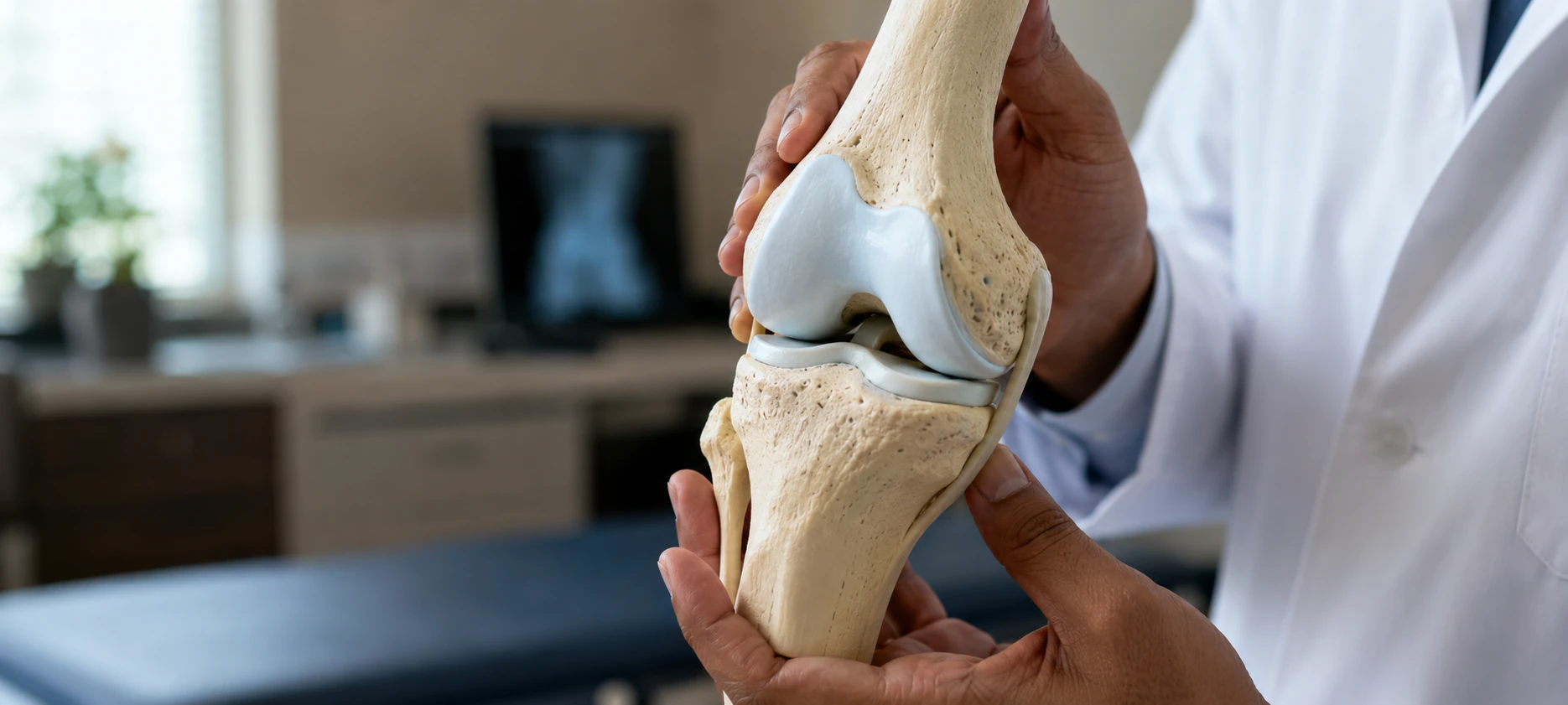
The Avascular Truth: Why Your Joints Take Months, Not Weeks, to Heal
Cartilage has almost no blood supply, so unlike muscle or skin it can't call in oxygen, nutrients, or repair cells fast — it relies on slow diffusion from joint fluid instead. This blog explains why that makes cartilage damage (like meniscus tears or worn knee cartilage) take months to partially heal, and sometimes never fully recover to its original quality. It covers what actually damages cartilage, the warning signs that mean "adjust training" rather than "push through," and busts common myths around joint cracking and glucosamine supplements. It closes with how Coach Himanshu builds training plans that protect joint longevity while still progressing strength and performance.
Ready to Start Your Fitness Journey?
Get personalized training and nutrition guidance from Coach Himanshu
Explore Plans