What NASM Certification Means for Your Fitness Coach

You have probably seen fitness coaches in India advertising "NASM Certified" as a credential. But what does NASM certification actually mean? Why should it matter to you as a client? And how does it translate to better results in your fitness journey?
This article explains everything about the National Academy of Sports Medicine certification -- what it covers, why it is considered the gold standard, and how NASM-trained coaches approach your fitness differently.
What Is NASM?
What Does NASM Certification Cover?
To earn a NASM-CPT (Certified Personal Trainer) credential, a professional must master and pass examinations in:
1. Human Movement Science
Anatomy, kinesiology, and biomechanics -- understanding how your body actually moves. This is why a NASM coach can look at your squat and immediately identify whether your ankles, hips, or thoracic spine are limiting your depth.
2. Exercise Science
The physiological responses to exercise -- how muscles contract, energy systems work, and adaptations occur over time. This knowledge ensures your program is designed based on how your body actually responds, not just what "looks hard."
3. The OPT Model (Optimum Performance Training)
NASM's signature training system. It is a progressive, periodised framework with five phases:
- Stabilization Endurance: Building foundation, correcting imbalances
- Strength Endurance: Increasing muscular endurance and stability
- Muscular Development: Hypertrophy training for muscle growth
- Maximal Strength: Heavy lifting for maximum force production
- Power: Explosive movements for athletic performance
4. Assessment and Corrective Exercise
NASM coaches learn to perform overhead squat assessments, pushing and pulling assessments, and single-leg balance tests to identify muscle imbalances and movement compensations before designing a program. This is critical for injury prevention, especially for clients with desk jobs or existing pain.
5. Nutrition Science
Macronutrient and micronutrient requirements, meal timing, hydration, and evidence-based dietary recommendations. NASM coaches provide nutrition guidance based on science -- not Instagram trends or bro-science myths.
6. Program Design
How to structure workouts with proper exercise selection, sets, reps, tempo, rest periods, and progression. A NASM-designed program considers acute variables like time under tension, training volume, and intensity percentage -- not just "do 3 sets of 10."
7. Special Populations
How NASM Training Differs From Uncertified Coaching
| Aspect | NASM Certified Coach | Uncertified Trainer |
|---|---|---|
| Assessment | Movement screening before program design | Jumps straight into workouts |
| Programming | Periodised, progressive, evidence-based | Same routine for months |
| Injury Prevention | Corrective exercise and mobility work built in | Reactive -- addresses injuries after they happen |
| Nutrition | Science-based macro planning | Generic "eat chicken and broccoli" advice |
| Progression | Systematic overload with deload weeks | Random intensity with no structure |
| Special Conditions | Modifications for PCOS, diabetes, injuries | Often unaware of contraindications |
NASM Specializations Beyond CPT
Beyond the base CPT certification, NASM offers advanced specializations that coaches can pursue:
- Corrective Exercise Specialist (CES): Advanced assessment and corrective strategies for pain and dysfunction
- Performance Enhancement Specialist (PES): Training for athletic performance and sports-specific conditioning
- Sports Nutrition Specialist: Advanced nutrition coaching for performance and body composition
- Behaviour Change Specialist: Psychology of habit formation and client motivation
How to Verify NASM Certification
- Show their certification certificate or digital badge
- Provide their NASM ID number
- Be verified through NASM's official website
Why This Matters for Your Fitness Journey
Your body is not a machine that responds to random inputs. It is a complex system that requires informed, progressive, and personalised training to produce optimal results safely. A NASM-certified coach understands this system at a level that self-taught trainers simply cannot match.
Whether you are dealing with a stubborn weight loss plateau, recovering from an injury, managing a medical condition, or training for peak performance -- the quality of your coach's education directly impacts your outcomes.
Take the free fitness assessment to experience what NASM-certified coaching looks like in practice, or learn more about Coach Himanshu's credentials.
Related Articles
Navratri Vrat Without the Guesswork: Rules, Body Science and Workouts
Navratri fasting varies by family, region and community, so this blog lays out the vrat rules as commonly followed rather than as one fixed rulebook. It explains the main types of fast (full vrat, first-and-last-day, phalahar, one meal a day, nirjala) and who each suits physiologically. It covers what fasting does inside the body, both the benefits and the risks. It exposes vrat-food traps like sabudana and fried snacks, and busts myths about detox, sendha namak and weight loss. It then gives practical workout guidance for each fast type, plus warning signs for when to stop and see a doctor.

Desk Job Posture: How to Reduce Back Pain, Rounded Shoulders and Hip Stiffness
Long hours of sitting can contribute to stiffness, reduced activity and discomfort in the back, shoulders and hips—but there is no single perfect posture everyone must maintain. This evidence-based guide explains common desk-job posture concerns, including rounded shoulders, forward head posture and anterior pelvic tilt, while separating research-backed advice from common myths. Discover practical strength exercises, mobility routines, movement breaks and ergonomic adjustments to support better movement and back health. Learn how to build sustainable habits, what improvements to expect, and when professional medical evaluation is necessary.
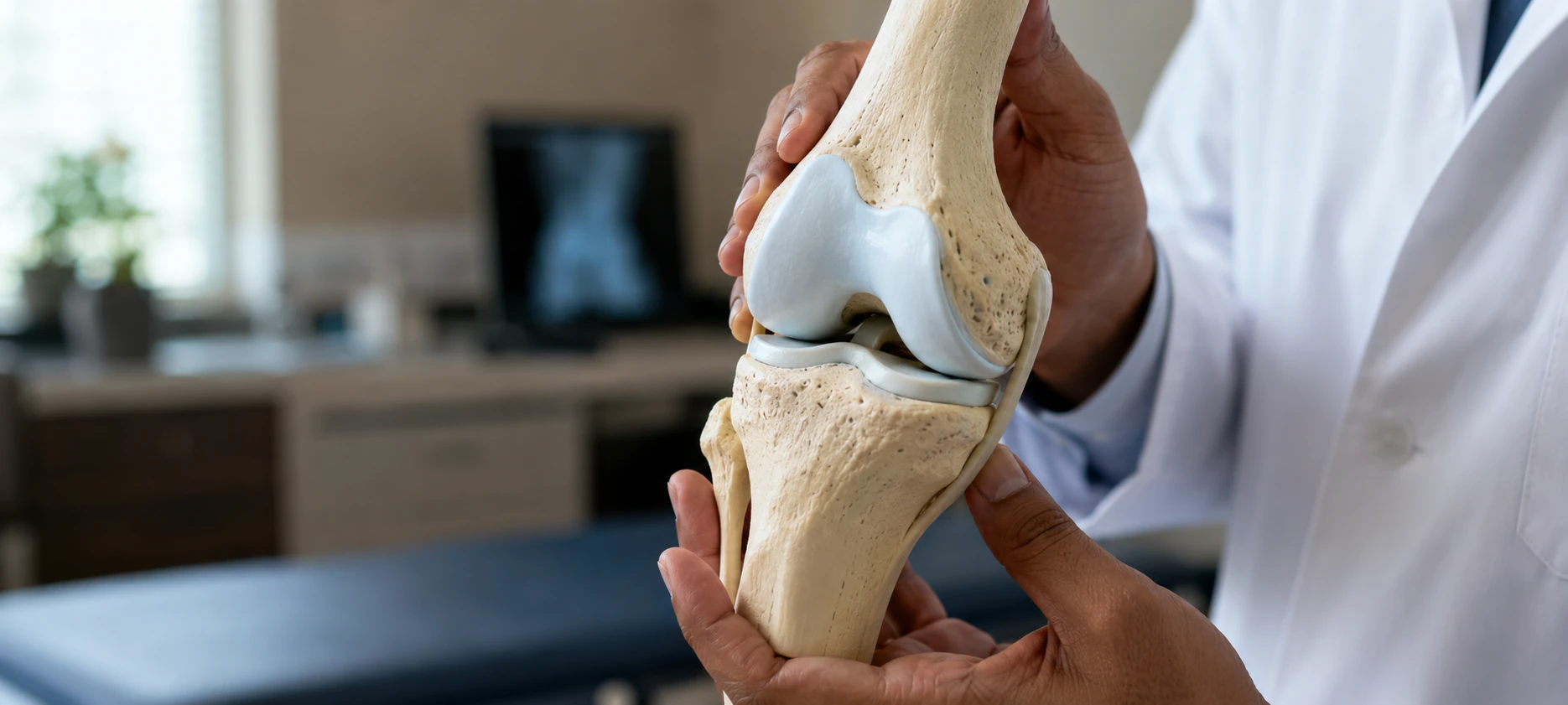
The Avascular Truth: Why Your Joints Take Months, Not Weeks, to Heal
Cartilage has almost no blood supply, so unlike muscle or skin it can't call in oxygen, nutrients, or repair cells fast — it relies on slow diffusion from joint fluid instead. This blog explains why that makes cartilage damage (like meniscus tears or worn knee cartilage) take months to partially heal, and sometimes never fully recover to its original quality. It covers what actually damages cartilage, the warning signs that mean "adjust training" rather than "push through," and busts common myths around joint cracking and glucosamine supplements. It closes with how Coach Himanshu builds training plans that protect joint longevity while still progressing strength and performance.
Ready to Start Your Fitness Journey?
Get personalized training and nutrition guidance from Coach Himanshu
Explore Plans