Fatty Liver Isn't Just an Alcohol Problem Anymore — Here's What It Actually Is

Fatty Liver Disease Explained: Alcoholic vs Non-Alcoholic, Is It Reversible?
Fatty liver shows up on more scan reports than almost any other finding today, often as an incidental line in an ultrasound nobody was expecting to worry about. Here's what it actually is, why it happens, and — the question that matters most — whether it can be reversed.
Fatty liver used to be discussed mainly in the context of heavy alcohol use. That's no longer the full picture — a large and growing share of fatty liver cases today have nothing to do with alcohol at all, and are tied instead to diet, body fat, and insulin resistance. Both versions are common, both are largely preventable, and — caught early — both are among the most reversible conditions in the entire liver disease spectrum. Before we get into the physiology, it helps to know where your own diet and calorie intake actually stand — the Indian Food Calorie Calculator gives you a real baseline instead of a guess.
What is fatty liver, exactly?
Fatty liver (hepatic steatosis) means excess fat — specifically triglycerides — has built up inside liver cells, beyond what the liver normally holds. A healthy liver contains a small amount of fat as part of normal metabolism; fatty liver is diagnosed when fat accounts for more than roughly 5–10% of the liver's weight. On its own, this build-up is often silent, but it changes how efficiently the liver can do its actual jobs: filtering toxins, processing nutrients, and regulating blood sugar and cholesterol.
The two types: alcoholic vs non-alcoholic
Alcoholic Fatty Liver Disease (AFLD)
AFLD is caused directly by regular, excessive alcohol intake. The liver prioritises breaking down alcohol over processing fat, so fat accumulates as a side effect of that metabolic shift. It's usually the earliest stage of alcohol-related liver disease — the stage before alcoholic hepatitis and, eventually, cirrhosis, if drinking continues unchanged.
Non-Alcoholic Fatty Liver Disease (NAFLD)
NAFLD is diagnosed when significant liver fat build-up happens with little to no alcohol involvement. It's driven instead by obesity, insulin resistance, type 2 diabetes, high triglycerides, and a diet heavy in refined sugar and ultra-processed food. NAFLD is now the more common of the two worldwide, and it has a further split worth knowing:
- Simple steatosis (NAFL) — fat is present, but there's little to no inflammation or liver cell damage. This stage is the most reversible.
- NASH (Non-Alcoholic Steatohepatitis) — fat build-up plus inflammation and active liver cell damage. This is the stage that can progress toward fibrosis if left unaddressed.
- Fibrosis and cirrhosis — repeated inflammation leads to scar tissue, which, in advanced cases, becomes permanent scarring (cirrhosis) that impairs liver function long-term.
Why fatty liver actually happens
For AFLD: the cause is direct — regular heavy alcohol intake, with risk rising alongside both quantity and duration of drinking.
For NAFLD, the common drivers are:
- Obesity and excess visceral (belly) fat — the single strongest risk factor
- Insulin resistance and type 2 diabetes — impaired insulin signalling pushes the liver to store more fat
- High triglycerides and poor cholesterol profile (dyslipidemia)
- A diet high in added sugar, refined carbs, and fructose — particularly sugary drinks, which the liver converts to fat efficiently
- Sedentary lifestyle — physical inactivity independently worsens liver fat storage regardless of diet
- Metabolic syndrome — the combination of high blood pressure, high blood sugar, excess abdominal fat, and abnormal cholesterol together
- Rapid weight loss or certain medications — less common triggers, but recognised contributors
Overweight and lean people can both develop NAFLD — insulin resistance and visceral fat, not the number on the scale, are the actual drivers, which is why "lean NAFLD" is a recognised and increasingly discussed category.
Is fatty liver reversible?
Largely, yes — especially the earlier you catch it. Simple steatosis, whether alcoholic or non-alcoholic in origin, is one of the most reversible conditions affecting the liver, often improving meaningfully within a few months of sustained lifestyle change. NASH with mild-to-moderate inflammation can also improve significantly, though it takes longer and more consistent effort. Advanced fibrosis and cirrhosis are harder to fully reverse — scar tissue doesn't undo easily — which is exactly why early detection and action matter so much more than waiting for symptoms to show up.
How fatty liver is actually treated
There is no supplement, pill, or "liver cleanse" that reverses fatty liver on its own. The approach that actually has evidence behind it is lifestyle-based:
- For AFLD: stopping or significantly reducing alcohol intake is the single most important step, alongside the same dietary and activity changes below
- For NAFLD: a sustained 7–10% reduction in body weight (where excess weight is present) is associated with measurable improvement in liver fat, and even meaningful improvement in inflammation at higher percentages of weight loss
- Managing the underlying drivers — blood sugar control, triglycerides, and blood pressure — alongside the liver-specific changes
- Any specific medication route for more advanced disease is a conversation for a doctor managing your case directly, not a general blog recommendation
Why diet matters so much here
The liver is where a large share of the fat and sugar you eat actually gets processed. Excess refined carbohydrate and added sugar — particularly fructose from sugary drinks and packaged snacks — gets converted into fat inside the liver itself through a process called de novo lipogenesis. That means diet isn't just "generally good for health" here; it's the direct mechanism behind the fat that's building up in the organ in question.
How diet actually helps reverse it
- Cut added sugar and sugary drinks first — this single change often moves the needle more than any other dietary tweak, since fructose is processed almost entirely by the liver
- Reduce refined carbs (maida, white bread, packaged snacks) in favour of whole grains and fibre-rich carbs
- Increase fibre — vegetables, fruits, whole grains, and pulses slow sugar absorption and support a healthier gut-liver relationship
- Prioritise healthy fats — nuts, seeds, fish, and olive oil over deep-fried and heavily processed fats
- Adequate protein — dal, paneer, eggs, fish, and chicken support muscle mass during any weight loss, which protects metabolic health further
- A structured calorie deficit, where excess weight is present, using your real numbers from the Indian Food Calorie Calculator rather than a guess
How exercise helps — and why it matters just as much
Exercise reduces liver fat through a pathway that's partly independent of weight loss itself — regular training improves how efficiently muscle uses fat and sugar for fuel, which reduces the amount left over for the liver to store.
- Aerobic exercise (brisk walking, cycling, swimming) — roughly 150 minutes a week of moderate activity is associated with measurable reductions in liver fat, even without major weight change
- Resistance training — builds muscle mass, which improves insulin sensitivity and gives the body a bigger "sink" for blood sugar, reducing the load that would otherwise end up stored as liver fat
- Consistency over intensity — regular moderate activity sustained over months outperforms occasional intense bursts for this specific outcome
This is the same principle behind any real body transformation — the mechanism doesn't change because the target organ is the liver instead of the mirror.
Myth vs fact: fatty liver edition
Fatty liver and the rest of your health
Fatty liver rarely travels alone — it shares the same metabolic root as several other conditions, including blood sugar and hormonal issues, which is worth understanding rather than treating each in isolation. If you're also dealing with unexplained weight or energy issues, it's worth reading about how hormone imbalance can quietly stall progress, and if cardiovascular risk is on your mind too, understanding how the heart can actually fail connects a lot of these same dots. Sleep also plays a bigger role here than most people expect — see why sleep is one of the most underrated levers for metabolic health generally.
How Coach Himanshu helps you actually reverse it
Understanding the science is step one. Building a diet and training plan that actually applies it — consistently, around your real life — is the part that gets results.
- A fatty-liver-aware diet plan built around real Indian foods — lower added sugar and refined carbs, higher fibre and protein — sized to your household portions, not a generic template
- Accurate tracking using the Indian Food Calorie Calculator, so your sugar and calorie intake is based on actual numbers, not a guess
- A structured training plan combining aerobic and resistance work through 1:1 online personal training, built around your current fitness level and progressing safely from there
- Coaching backed by real credentials — see what NASM certification actually means for your coach — so the guidance behind your plan is evidence-based, not guesswork
- Ongoing check-ins to track how your weight, energy, and consistency are actually trending — the same signals that matter for liver health, not just the mirror
Fatty liver is one of the few diagnoses where consistent diet and exercise aren't just "helpful" — they're the actual treatment. A personalised plan is how that treatment gets built around your real life instead of staying a vague instruction from a lab report.
Ready to build a diet and training plan that actually works with your liver, not against it?
Related Articles

Navratri Vrat Without the Guesswork: Rules, Body Science and Workouts
Navratri fasting varies by family, region and community, so this blog lays out the vrat rules as commonly followed rather than as one fixed rulebook. It explains the main types of fast (full vrat, first-and-last-day, phalahar, one meal a day, nirjala) and who each suits physiologically. It covers what fasting does inside the body, both the benefits and the risks. It exposes vrat-food traps like sabudana and fried snacks, and busts myths about detox, sendha namak and weight loss. It then gives practical workout guidance for each fast type, plus warning signs for when to stop and see a doctor.

Desk Job Posture: How to Reduce Back Pain, Rounded Shoulders and Hip Stiffness
Long hours of sitting can contribute to stiffness, reduced activity and discomfort in the back, shoulders and hips—but there is no single perfect posture everyone must maintain. This evidence-based guide explains common desk-job posture concerns, including rounded shoulders, forward head posture and anterior pelvic tilt, while separating research-backed advice from common myths. Discover practical strength exercises, mobility routines, movement breaks and ergonomic adjustments to support better movement and back health. Learn how to build sustainable habits, what improvements to expect, and when professional medical evaluation is necessary.
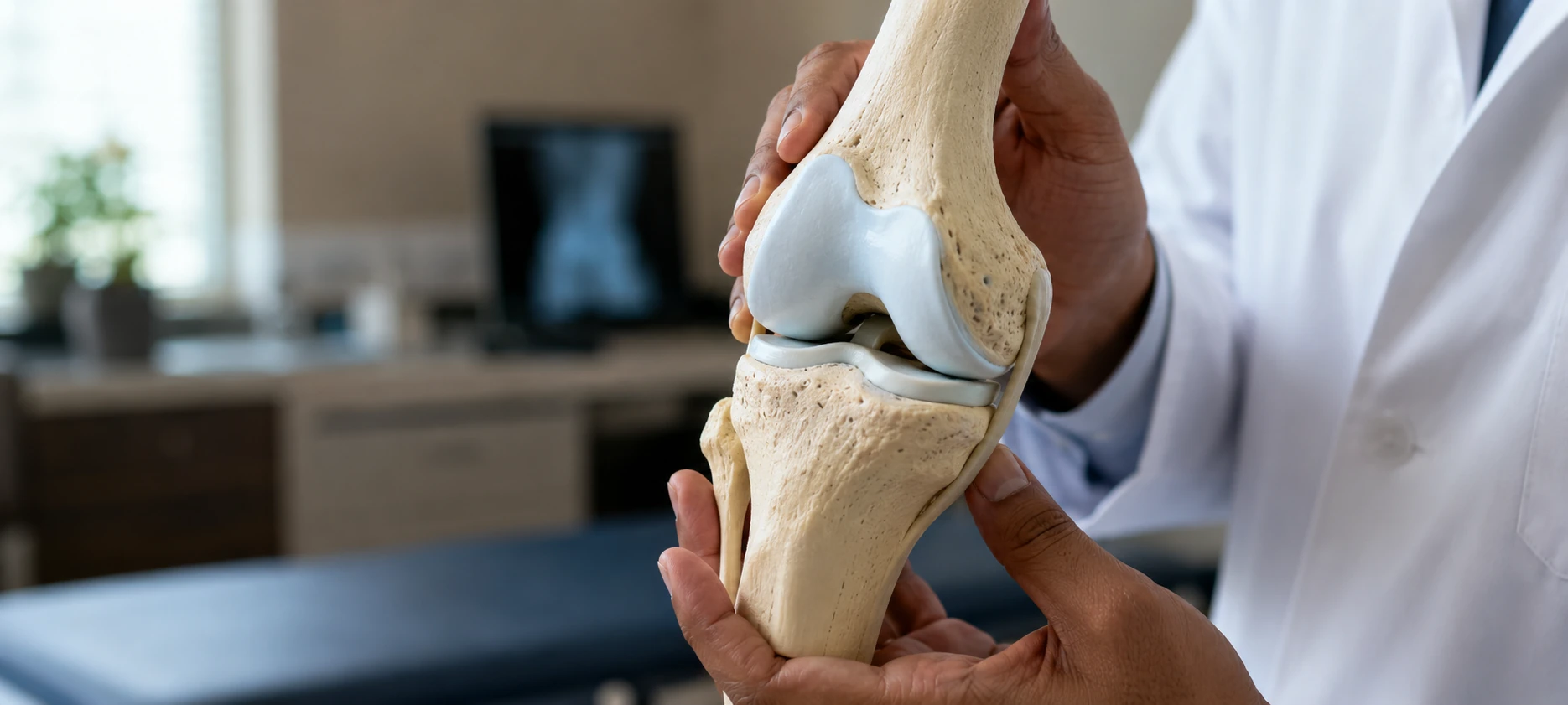
The Avascular Truth: Why Your Joints Take Months, Not Weeks, to Heal
Cartilage has almost no blood supply, so unlike muscle or skin it can't call in oxygen, nutrients, or repair cells fast — it relies on slow diffusion from joint fluid instead. This blog explains why that makes cartilage damage (like meniscus tears or worn knee cartilage) take months to partially heal, and sometimes never fully recover to its original quality. It covers what actually damages cartilage, the warning signs that mean "adjust training" rather than "push through," and busts common myths around joint cracking and glucosamine supplements. It closes with how Coach Himanshu builds training plans that protect joint longevity while still progressing strength and performance.
Ready to Start Your Fitness Journey?
Get personalized training and nutrition guidance from Coach Himanshu
Explore Plans