Skinny Fat to Fit: Complete Body Recomposition Guide
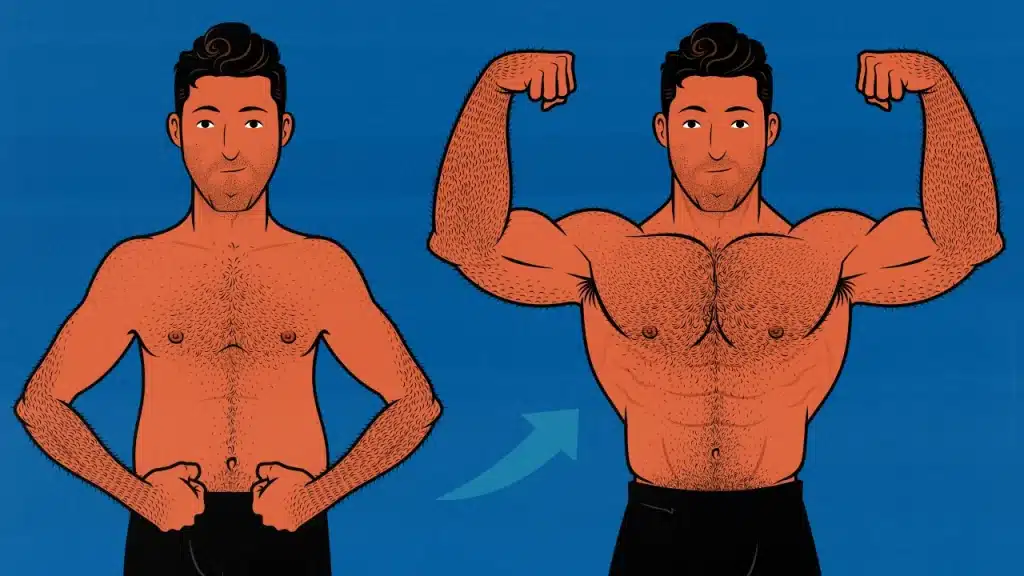
You are not overweight. Your BMI says you are "normal." But when you look in the mirror, you see a soft, undefined body -- a belly that pokes out, arms that lack definition, and an overall appearance that looks neither lean nor muscular. Welcome to the world of skinny fat, one of the most frustrating and misunderstood body types in fitness.
The medical term is normal-weight obesity -- a high body fat percentage hidden behind a normal body weight. It affects millions of Indians, especially those with sedentary desk jobs and carb-heavy diets. The solution is not losing weight or gaining weight. It is body recomposition: simultaneously building muscle and losing fat to completely transform how your body looks and functions.
What Causes Skinny Fat?
Understanding the root cause is critical because the solution depends on it:
Sedentary lifestyle: Sitting 8-10 hours daily at IT jobs, in classrooms, or during long commutes causes progressive muscle loss
Protein-deficient diets: The average Indian vegetarian diet provides 40-50g protein daily -- barely half of what is needed to maintain muscle mass
Excessive cardio without strength training: Running or cycling without lifting weights burns muscle along with fat
Crash dieting history: Repeated cycles of extreme calorie restriction destroy metabolic rate and muscle mass
Genetics: Some individuals naturally carry less muscle and more fat due to hormonal profiles -- but this is modifiable with training
The Body Recomposition Approach: Build Muscle, Lose Fat
Should You Bulk or Cut First?
This is the most debated question in skinny fat fitness circles. Here is the definitive answer:
| Your Situation | Recommendation | Why |
|---|---|---|
| Body fat above 25% (men) or 35% (women) | Slight calorie deficit (recomp) | You have enough stored energy for your body to build muscle while losing fat |
| Body fat 20-25% (men) or 28-35% (women) | Eat at maintenance calories | Your body can recompose efficiently at maintenance with proper training |
| Complete beginner to strength training | Eat at maintenance or slight surplus (+200 kcal) | Beginners can build muscle rapidly even in a deficit (newbie gains) |
| Experienced lifter who became skinny fat | Mini-cut for 6-8 weeks, then lean bulk | Experienced lifters cannot easily recompose; phased approach works better |
The Training Plan: Building the Muscle You Lack
Why Strength Training is Everything
If you are skinny fat, strength training is 90% of the solution. Not cardio. Not yoga. Not HIIT. Pure, progressive resistance training that forces your muscles to grow. Cardio should be supplementary, not primary.
The 4-Day Recomposition Programme
| Day | Focus | Key Exercises |
|---|---|---|
| Monday | Upper Body Push | Bench press, overhead press, dips, tricep pushdowns |
| Tuesday | Lower Body | Squats, Romanian deadlifts, leg press, calf raises |
| Wednesday | Rest or light cardio (walking) | - |
| Thursday | Upper Body Pull | Pull-ups/lat pulldown, barbell rows, face pulls, bicep curls |
| Friday | Lower Body + Core | Deadlifts, lunges, leg curls, planks, hanging leg raises |
| Saturday | Light cardio or active recovery | 30-40 min walk or swimming |
| Sunday | Complete rest | - |
The Recomposition Diet: Indian Edition
Macro Targets for Skinny Fat Recomposition
Protein: 2.0-2.2g per kg body weight (this is non-negotiable -- high protein is the engine of recomposition)
Fats: 0.8-1g per kg body weight (essential for hormones, especially testosterone)
Carbs: Fill remaining calories with carbs (focus on complex carbs -- brown rice, oats, roti, sweet potato)
Calories: Maintenance level (use a TDEE calculator, typically 2000-2400 kcal for Indian males, 1600-1900 for females)
Sample Indian Recomposition Diet (70 kg male, 2200 kcal, 140g protein)
| Meal | Food | Protein |
|---|---|---|
| Breakfast | 4 egg whites + 2 whole eggs (bhurji) + 2 roti + curd | 30g |
| Mid-Morning | Whey protein shake with banana | 25g |
| Lunch | Chicken curry (150g) + brown rice (1 cup) + salad | 35g |
| Evening Snack | Paneer tikka (100g) + green tea | 18g |
| Dinner | Dal (1 bowl) + 2 roti + mixed veg sabzi + raita | 18g |
| Before Bed | Greek yoghurt/hung curd with almonds | 14g |
Tracking Progress: Forget the Scale
During body recomposition, the scale may barely move for weeks because you are simultaneously gaining muscle and losing fat. These weigh similar amounts. Track progress using:
Progress photos: Same lighting, same angle, same time of day -- every 2 weeks
Body measurements: Waist circumference (should decrease), chest and arm circumference (should increase)
Strength numbers: If your lifts are going up, you are building muscle. Period.
How clothes fit: Shirts tighter in the shoulders, looser in the waist is the recomp signature
Body fat percentage: Use calipers or a DEXA scan every 8-12 weeks for the most accurate measure
Common Recomposition Mistakes
- Doing excessive cardio: 45 minutes of cardio 5 days a week will keep you skinny fat. Limit cardio to 2-3 sessions of 20-30 minutes and prioritise lifting.
- Eating too little protein: This is the single biggest dietary mistake. Without adequate protein, your body cannot build muscle regardless of how hard you train.
- Programme hopping: Switching workouts every 2 weeks means you never progress. Stick with one programme for at least 8-12 weeks.
- Avoiding compound movements: Isolation exercises (bicep curls, tricep kickbacks) alone will not transform a skinny fat physique. Prioritise squats, deadlifts, bench press, rows, and overhead press.
- Expecting overnight results: Recomposition is slower than a bulk or cut, but the results are more sustainable and aesthetic.
The skinny fat physique was not built in a day, and it will not be fixed in a day. But every week of consistent training and proper nutrition moves you closer to a body that looks as strong as it is.
Transform Your Physique with Expert Guidance
Coach Himanshu specialises in body recomposition for skinny fat individuals. His approach combines progressive strength training, Indian-diet-optimised nutrition plans, and consistent accountability to produce transformations that last.
Take the free fitness assessment to get a customised recomposition plan, or explore the coaching plans to start your transformation. Read more training and nutrition insights on our fitness blog.
Related Articles

Navratri Vrat Without the Guesswork: Rules, Body Science and Workouts
Navratri fasting varies by family, region and community, so this blog lays out the vrat rules as commonly followed rather than as one fixed rulebook. It explains the main types of fast (full vrat, first-and-last-day, phalahar, one meal a day, nirjala) and who each suits physiologically. It covers what fasting does inside the body, both the benefits and the risks. It exposes vrat-food traps like sabudana and fried snacks, and busts myths about detox, sendha namak and weight loss. It then gives practical workout guidance for each fast type, plus warning signs for when to stop and see a doctor.

Desk Job Posture: How to Reduce Back Pain, Rounded Shoulders and Hip Stiffness
Long hours of sitting can contribute to stiffness, reduced activity and discomfort in the back, shoulders and hips—but there is no single perfect posture everyone must maintain. This evidence-based guide explains common desk-job posture concerns, including rounded shoulders, forward head posture and anterior pelvic tilt, while separating research-backed advice from common myths. Discover practical strength exercises, mobility routines, movement breaks and ergonomic adjustments to support better movement and back health. Learn how to build sustainable habits, what improvements to expect, and when professional medical evaluation is necessary.
The Avascular Truth: Why Your Joints Take Months, Not Weeks, to Heal
Cartilage has almost no blood supply, so unlike muscle or skin it can't call in oxygen, nutrients, or repair cells fast — it relies on slow diffusion from joint fluid instead. This blog explains why that makes cartilage damage (like meniscus tears or worn knee cartilage) take months to partially heal, and sometimes never fully recover to its original quality. It covers what actually damages cartilage, the warning signs that mean "adjust training" rather than "push through," and busts common myths around joint cracking and glucosamine supplements. It closes with how Coach Himanshu builds training plans that protect joint longevity while still progressing strength and performance.
Ready to Start Your Fitness Journey?
Get personalized training and nutrition guidance from Coach Himanshu
Explore Plans