Why Winter Is the Best Season to Transform Your Body — And Why Most People Waste It

Winter Arc Transformation: Why This Season Actually Changes Your Body
Most people wait for the first cold morning in November to start their "winter arc." By then they've already lost the head start. Here's the actual physiology of why winter is the best training window you'll get all year — and why starting the plan now, in September, is what actually decides whether you're still on it in January.
Right about now, the same reel format starts showing up on every feed: someone declaring their "winter arc," promising to disappear and come back unrecognizable by New Year's. Most people don't actually act on it until the weather forces them to, weeks into winter, which means they lose the easiest part of the runway. The instinct behind the trend isn't wrong — winter genuinely is the best training window most people get all year. What goes wrong is almost never the season. It's the plan, and when it actually starts. Before you build yours, it helps to know your starting numbers today — the Indian Food Calorie Calculator gives you a real baseline across 850+ Indian foods instead of a guess.
Why winter actually gives you an edge over summer
This isn't just a mood thing. There's real physiology behind why training in winter beats training through peak Indian summer heat and humidity.
- Far less heat strain, so you can push harder for longer. In the heat, your body is fighting two demands for the same blood supply at once — sending blood to working muscles and sending blood to the skin to cool you down. That competition is a big part of why hot-weather sessions feel capped early: heart rate climbs faster, fatigue sets in sooner, and long or high-intensity sessions get cut short. Cooler, moderate temperatures remove most of that competition, which is exactly why marathons and other endurance events are scheduled for cooler months in the first place — the body tolerates a longer, harder session without the same cardiovascular tax.
- Far less sweat loss and dehydration risk. Less fluid and electrolyte loss during a session means less mid-workout fatigue and faster recovery between sets and between sessions — you're not constantly training in a mild dehydration deficit the way you often are in summer.
- A small, genuine bump in energy expenditure from staying warm. When it's cold, your body spends some extra energy just maintaining core temperature — through shivering and non-shivering thermogenesis. This effect is real, but it's modest for anyone training indoors or in India's moderate winter climate (not the sub-zero conditions where the effect is much larger) — it's a small bonus on top of your training and diet, not a fat-loss shortcut on its own.
- Better sleep and appetite regulation for most people. Cooler nights generally support deeper sleep, and sleep quality directly affects hunger hormones, recovery, and how consistent you can be with training — three things that matter more to your results than almost anything else.
Put together, this is why winter is the season where people are physically capable of handling more training volume and intensity than they can sustain through a hot, humid summer.
Why most people still fail their winter arc
If winter is genuinely the easier season to train in, why does almost everyone who starts a "winter arc" quit before December? The pattern is consistent, and it has nothing to do with the season.
How body transformation actually happens
Winter gives you better conditions to train in. It does not change the underlying mechanism your body actually transforms through — that part is the same in every season:
- A structured calorie target. Fat loss requires a consistent calorie deficit; muscle gain requires a consistent, moderate surplus. Neither happens by accident, and neither requires an extreme number to work.
- Progressive overload. Muscles adapt to a training demand that's slightly harder than what they've already handled — gradually more weight, reps, sets, or better execution over time. Novelty and "shocking" the body aren't the driver; a structured, trackable increase in demand is.
- Enough protein and recovery. Muscle repair happens with adequate protein intake and adequate sleep, not during the workout itself. Training breaks the tissue down; food and rest are what rebuild it.
- A realistic timeline. Visible body transformation — the kind a "before and after" photo actually shows — takes a minimum of 12–16 weeks of consistent execution, not the 4–6 weeks most winter arc plans budget for. Winter, at roughly four months long, is genuinely just long enough to complete one full cycle of this — if the plan is built to last the whole season instead of the first three weeks of it. For a full breakdown of what a realistic timeline looks like, see our complete guide to body transformation in 90 days.
How Coach Himanshu's coaching platform helps you actually finish this winter arc
Understanding the physiology and the mechanism is one part of this. Executing it consistently for 12–16 weeks, through the exact months most people quit, is the harder part — and it's the part a coaching relationship is built for.
- A plan sized to your actual starting point, not a generic reel template — built from a real assessment of your training history, schedule, and goal, delivered through structured 1:1 online personal training.
- Indian meal plans with real household portions — cross-checked against the same Calorie Calculator data so your deficit or surplus is based on your actual intake, not a guess.
- A training split built around progressive overload from week one, structured to still be safely progressing you in week 14 — not just week 2.
- Ongoing coaching and check-ins from a coach who actually holds the credentials behind the guidance — see what NASM certification actually means for your coach — so the plan adjusts as your body adapts instead of staying static (or getting abandoned) the way most self-made winter arc plans do.
If you're serious about actually being different by the time winter ends this year — not just for the first three weeks of it — a personalized plan built around your body and schedule is the difference between another reel-inspired restart next year and an actual result.
Ready to make this your actual transformation season?
A free assessment turns this into a real Indian diet and workout plan built around your body, routine and goal.
Related Articles
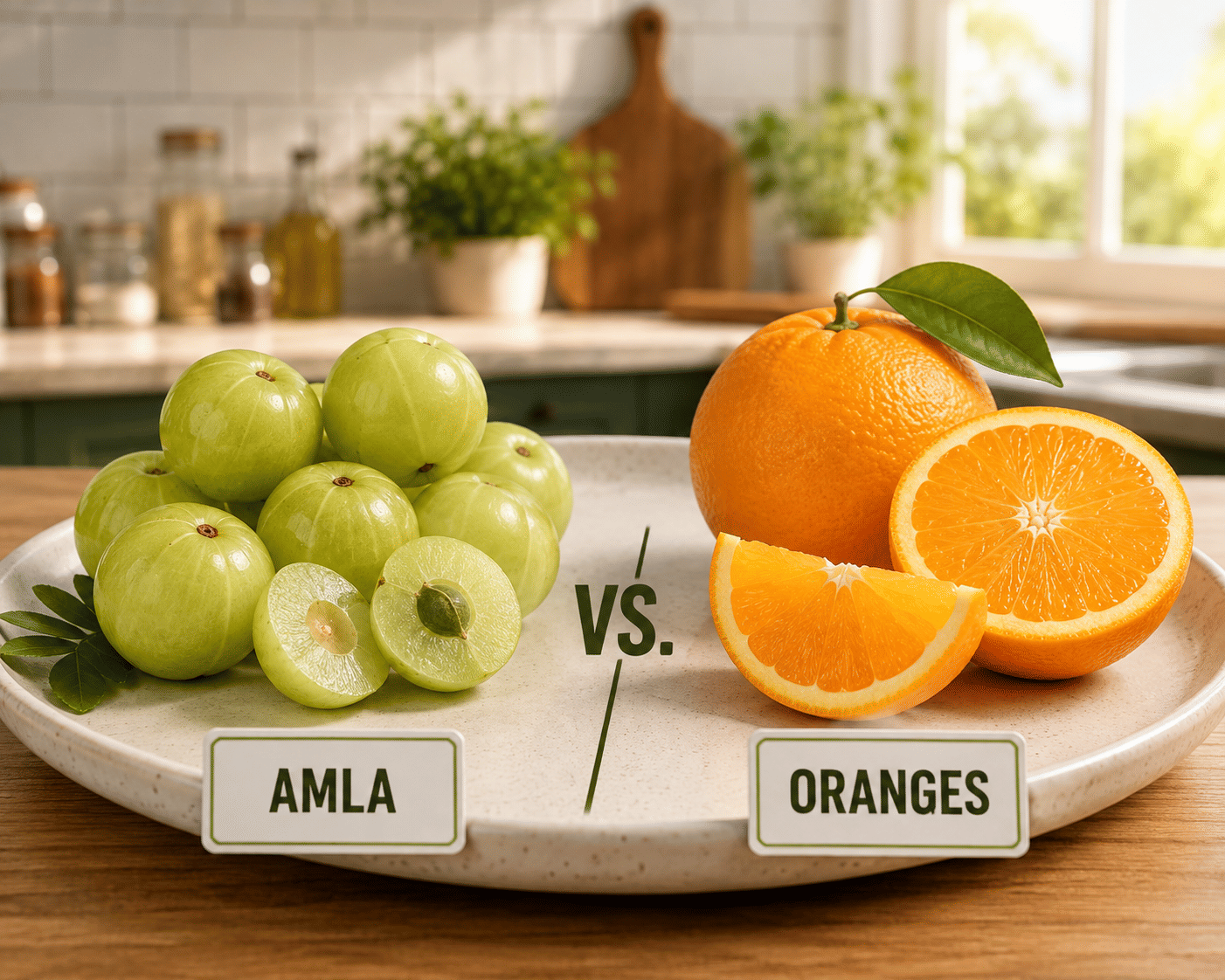
Amla vs Orange: The Real Vitamin C Rankings for Indian Diets
This blog explains what vitamin C really does in the body, how much you actually need, and which Indian foods give you the most of it — spoiler: amla and guava beat oranges by far. It clears up common myths, like the idea that taking huge doses prevents colds, using a simple color-coded myth vs. fact section. It also covers who might need a bit more vitamin C (like smokers), how much is too much, and why food sources are better than relying on serums or supplements alone.

The Calorie Calculator That Finally Understands Indian Food
Most calorie apps aren't built for Indian food — they can't tell you what a katori of dal actually costs you. This post introduces the Indian Food Calorie Calculator, a tool with 600+ Indian foods searchable in real household units (katori, roti, cup), pulling data from INDB, ICMR and USDA sources. It walks through how to use it, breaks down a real thali's calories and protein as an example, and makes the point that knowing your numbers is step one — a personalized plan is step two.
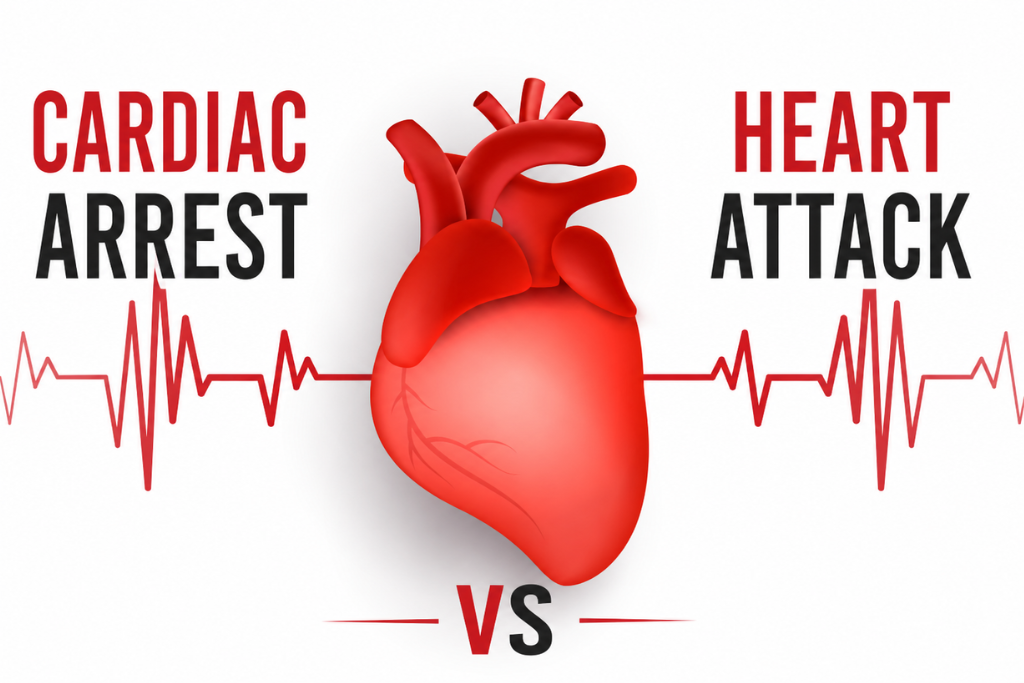
Your Heart Can Fail Two Ways — Here's the Difference
Most people use "heart attack" and "cardiac arrest" as if they mean the same thing — they don't. A heart attack is a circulation problem caused by a blocked artery, while cardiac arrest is an electrical malfunction that stops the heart from beating altogether. This blog breaks down the real difference, how one can trigger the other, and why knowing this could change how you respond in an emergency. It also connects the science back to everyday nutrition and training, showing how consistent diet and exercise habits help protect your heart long-term.
Ready to Start Your Fitness Journey?
Get personalized training and nutrition guidance from Coach Himanshu
Explore Plans