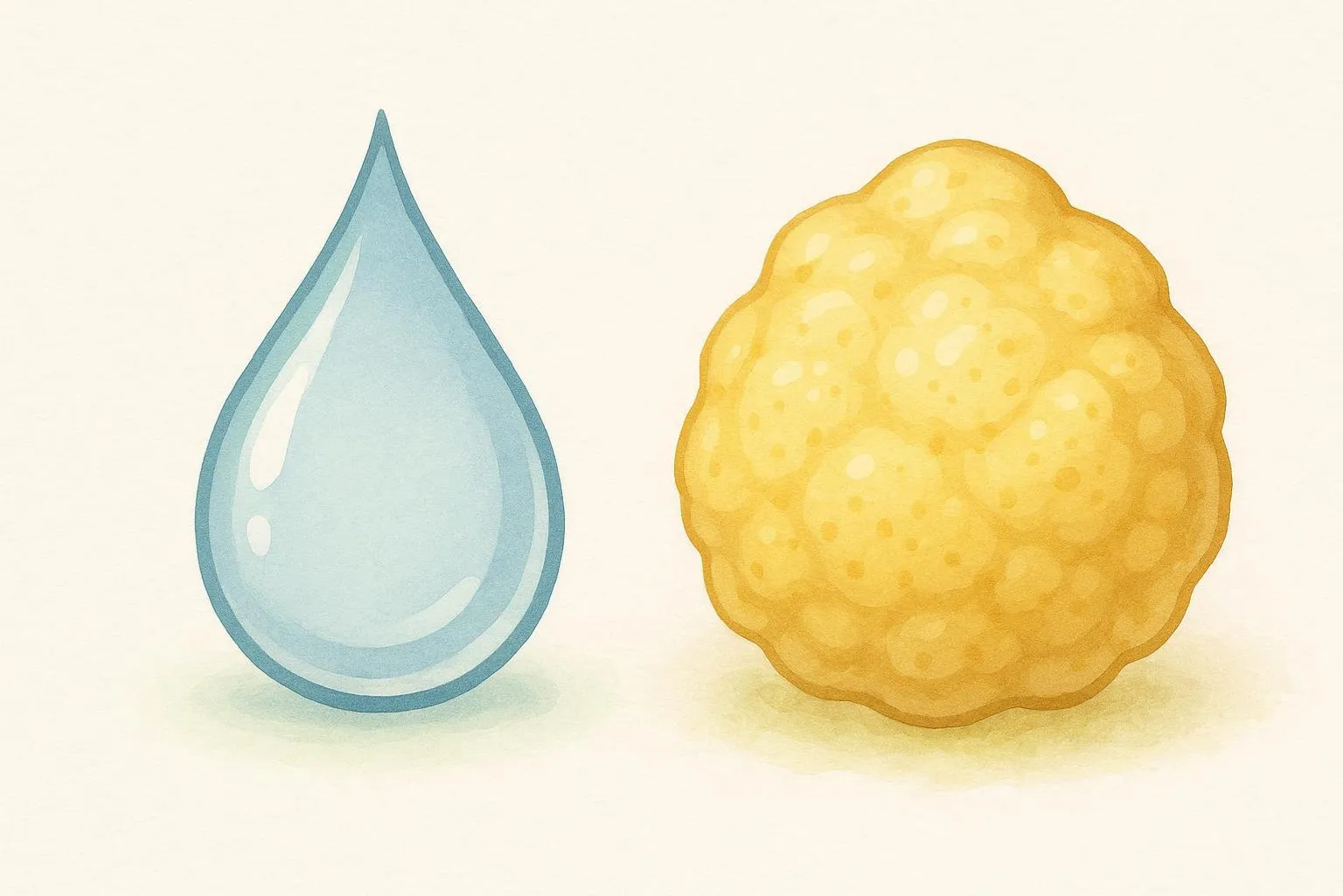
Water Weight vs Fat Weight: The Real Difference Your Scale Won't Tell You
You can gain or lose 1-2kg of water weight in a single day. You cannot gain or lose 1-2kg of actual body fat that fast, no matter how the number on the scale looks. Here's the real physiology behind what's actually moving when that number changes.
Step on the scale the morning after a salty dinner or a rest day, and the number can jump in a way that feels alarming. The instinct is to assume fat magically appeared overnight. It didn't — what actually moved is water. Understanding why your body can swing 1-2kg in either direction within 24 hours, while true fat mass barely moves in that same window, is the difference between panicking over noise and actually tracking progress. Before we get into the physiology, it helps to know your real numbers — the Indian Food Calorie Calculator gives you an accurate baseline instead of a scale-driven guess.
The real difference between water weight and fat weight
- Water weight is fluid your body is holding in and around your cells, muscles, and gut. It moves with sodium intake, carbohydrate intake, hormones, hydration status, sleep, and exercise — and it can shift by 1-2kg or more within a single day.
- Fat weight is stored energy inside fat cells. It only changes with a sustained calorie surplus or deficit built up over many days to weeks — it cannot meaningfully move in a single day, no matter how extreme the meal or the workout.
- Why the math rules out fast fat change: roughly 7,700 calories make up one kilogram of body fat. Even a genuinely large single-day calorie surplus or deficit is nowhere close to that number — which is exactly why a 1-2kg overnight scale swing has to be water, not fat.
How fat is actually stored in the body
When you eat more calories than you burn, the surplus energy is converted and stored as triglycerides inside fat cells (adipocytes) — mainly just under the skin (subcutaneous fat) and around internal organs (visceral fat). This process is gradual and cumulative: fat cells fill up over repeated days of surplus, not in a single sitting. That's also why fat gain from one indulgent day, or one indulgent week, is far smaller than most people assume — the scale move you actually see afterward is overwhelmingly water and digested food volume, not new fat tissue.
How water is actually stored in the body
- Glycogen-bound water: your muscles and liver store carbohydrate as glycogen, and every gram of glycogen is stored with roughly 3-4 grams of water. A single high-carb refeed can restore several hundred grams of glycogen — and the water that comes bound to it — which alone can move the scale by well over a kilogram.
- Sodium: sodium pulls water into the spaces around your cells to keep fluid balance stable. A high-sodium meal (very common with restaurant or processed food) means your body holds extra water until that sodium is processed out.
- Hormonal fluctuation: hormonal shifts across a menstrual cycle are a well-documented cause of temporary water retention for many women, independent of anything on the scale being fat-related.
- Gut contents and hydration status: undigested food, fiber, and how hydrated you are at the moment you weigh in all add or subtract weight that has nothing to do with fat.
How the body actually loses fat vs. how it actually loses water
Fat loss requires a sustained calorie deficit. Stored fat is broken down (lipolysis) and the fatty acids are oxidized for energy — the majority of that fat mass actually leaves the body as carbon dioxide you exhale, with a smaller portion leaving as water. This is a slow, capped process: even under the most aggressive sustained deficit, real-world fat loss tops out at roughly 100-200 grams a day for most people, before the body starts pulling from muscle instead.
Water loss happens far faster and through completely different routes: sweating during exercise, increased urination as the kidneys flush out excess sodium, and glycogen depletion releasing its bound water when carbohydrate intake drops. This is exactly why the scale can fall by a kilogram or more within a day or two of starting a lower-carb or lower-sodium approach — and why that same kilogram can just as quickly come back the moment carbs or salt go back up.
How diet and exercise affect both fat and water — gain and loss
- A single high-carb, high-sodium meal replenishes glycogen and pulls in extra fluid, which can show up as a 1-2kg scale jump the next morning — that is water, not a fat gain that undoes a week of progress.
- The first week of a new diet, especially a lower-carb one, often shows the biggest scale drop of the entire plan — almost entirely glycogen and its bound water leaving the body, not fat.
- A hard training session depletes glycogen and causes sweat loss, temporarily lowering the scale — while the actual muscle-building and fat-loss benefit of that session shows up over the following weeks through consistent progressive overload, not on tomorrow's scale reading.
- Sustained caloric surplus or deficit, tracked over weeks rather than single meals or single days, is the only lever that actually moves fat mass — which is why real transformation is measured in trends, not daily scale numbers.
Myth vs fact: reading your scale correctly
MYTHA 1-2kg jump on the scale after a heavy or salty meal means I gained fat.
FACTGaining 1kg of true body fat requires a sustained surplus of roughly 7,700 calories — no single meal provides that. That overnight jump is sodium and glycogen pulling in water, not new fat tissue.
MYTHA big weight drop in the first week of a new diet means I'm burning a lot of fat.
FACTMost of that first-week drop is glycogen-bound water leaving the body — up to 3-4 grams of water per gram of glycogen depleted. True fat loss stays capped at roughly 100-200 grams a day, even in an aggressive deficit.
MYTHDaily scale weight is the best way to track fat loss progress.
FACTBecause water weight alone can swing 1-2kg in a single day from sodium, carbs, hormones, hydration, and exercise, one day's number is mostly noise. Weekly or bi-weekly trend averages are what actually reflect fat loss.
How Coach Himanshu helps you track the difference correctly
Knowing the physiology is one thing — actually building a plan and a tracking system around it is what prevents you from quitting over a water-weight scare or celebrating a water-weight illusion.
- A plan built on your real numbers from day one, cross-checked against the same Calorie Calculator data used throughout your coaching, so your deficit or surplus is based on actual intake, not scale panic.
- Weekly and trend-based tracking instead of reactionary daily weigh-ins, so a salty meal or a hard training day never derails a plan that's actually working.
- Structured 1:1 online personal training that adjusts your program as your body actually adapts, guided by a coach who holds the credentials behind the guidance — see what NASM certification actually means for your coach.
- Ongoing coaching and check-ins that teach you to read your own body composition signals correctly, so you stop making diet or training decisions based on a single misleading scale number.
If you're tired of your motivation rising and falling with a scale number that's mostly water, a personalized plan built around real tracking is what turns confusing daily fluctuations into an actual, measurable transformation.
Disclaimer: This article is educational and general in nature, and is not individualized medical or dietetic advice. Scale weight, water retention, and fat loss patterns vary by individual health status, medication use, and hormonal factors, so anyone with an existing medical condition should consult a doctor before making significant changes to diet or training.
Ready to track your real progress, not the noise?
Get a real Indian diet and workout plan built around your body, routine and goal — not another one-size-fits-all template.