White Fat vs Brown Fat — The Real Science Behind
Fat Loss
When people hear the word “fat,” they immediately imagine belly fat, thighs, or stubborn love handles.
But here’s the truth — not all fat is the same.
Your body contains two major types of fat: white fat and brown fat. One stores energy, while the other burns it.
Understanding this difference can completely change how you approach fat loss, metabolism, and overall health.
🔥 What Is Fat, Really?
Fat is not just stored energy — it is a living, active organ that directly influences hormones, metabolism, appetite, and even immunity.
It stores nutrients when you eat and releases them when your body needs energy. But how it behaves depends on its type.
⚪ White Fat (White Adipose Tissue – WAT)
White fat is the most common type of fat found in adults.
🔷 Characteristics
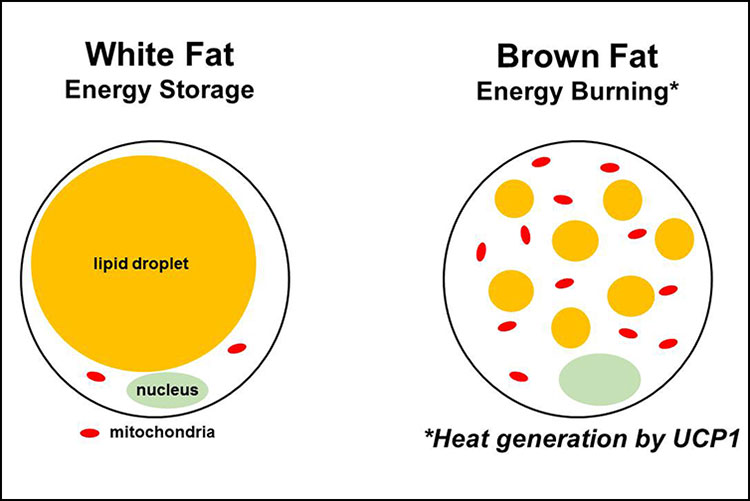
Contains a single large fat droplet, appears white or yellowish, and has very few mitochondria — meaning low calorie-burning capacity.
🔷 Main Functions
Stores excess calories, releases hormones like leptin and adiponectin, protects organs, and helps in insulation.
🔷 Where It’s Found
Belly (visceral fat), thighs, hips, lower back, arms, and chest.
🔷 Why It Increases
High calorie intake, low activity, stress, poor sleep, aging, and hormonal imbalances.
👉 Excess white fat leads to obesity, insulin resistance, slow metabolism, and increased disease risk.
🟤 Brown Fat (Brown Adipose Tissue – BAT)
Brown fat is the “fat-burning” fat — it helps burn calories instead of storing them.
🔷 Characteristics
Contains multiple small fat droplets, is rich in mitochondria, and burns calories to produce heat.
🔷 Main Functions
Maintains body temperature, burns stored fat, and increases metabolic rate.
🔷 Where It’s Found
Neck, shoulders, upper back, around the spine, and near the kidneys.
🔷 Who Has More Brown Fat?
Newborn babies, lean individuals, physically active people, and those regularly exposed to cold environments.
🔬 The Science Behind Brown Fat
Brown fat contains a special protein called UCP1 (Uncoupling Protein-1) inside mitochondria.
This protein allows the body to burn calories and release them as heat instead of storing them.
This process is called non-shivering thermogenesis.
👉 In simple terms: Brown fat works like an internal fat-burning heater.
It helps improve insulin sensitivity, increase calorie burning, and protect against obesity.
❄️ Can You Increase Brown Fat?
Yes — scientific research shows that brown fat activity can be improved naturally.
🔷 Cold Exposure
Cold showers, ice exposure, and cooler environments activate brown fat.
🔷 Strength Training
More muscle mass increases metabolic rate and supports brown fat activation.
🔷 High Protein Diet
Protein increases thermogenesis and improves metabolic efficiency.
🔷 Quality Sleep
Poor sleep reduces fat-burning hormones and increases fat storage.
🔷 Specific Nutrients
Capsaicin (chili), green tea catechins, and omega-3 fatty acids support brown fat function.
⚠️ What Happens When White Fat Dominates?
Excess white fat — especially visceral fat — increases the risk of serious health issues.
🔷 Health Risks
Diabetes, heart disease, high blood pressure, PCOS in women, low testosterone in men, slow metabolism, and chronic inflammation.
👉 The goal is not zero fat — the goal is balance.
💡 Practical Fat Loss Strategy
🔷 Reduce White Fat
Maintain calorie control, eat a protein-rich diet, and perform consistent strength training.
🔷 Activate Brown Fat
Use cold exposure, optimize sleep, and include metabolic conditioning workouts.
🔷 Improve Hormones
Manage stress and insulin levels to improve fat-burning efficiency.
🔷 Build Muscle
More muscle means higher calorie burning and better body composition.
🧠 Final Summary
White fat stores energy — excess leads to fat gain.
Brown fat burns energy — helps in fat loss.
Activating brown fat is a science-backed way to improve metabolism and health.
Cold exposure, strength training, proper sleep, and nutrition all play a major role.
Understanding your body at this level is what separates random effort from smart fat loss.
🏁 Final Words from Coach Himanshu
Fat loss is not just about eating less — it’s about understanding how your body works. When you focus on improving metabolism, building muscle, and optimizing your lifestyle, fat loss becomes more efficient and sustainable. Train smart, recover well, and use science to your advantage.