Use It or Lose It — Why Muscles Are Not Permanent

Most people believe that once they build muscle, it stays forever. You train for years, gain muscle, improve strength, and then assume your body will maintain all of it permanently.
Unfortunately, human physiology doesn't work that way. Your body follows a simple biological rule:
This concept is known as the Use It or Lose It Principle, and it affects muscles, bones, cardiovascular fitness, flexibility, skills, and even brain function. The body is constantly adapting to the demands you place upon it.
Let's break down the science behind this powerful physiological principle.
1️⃣ Your Body Is Always Adapting
Many people think muscle growth happens because they lift weights. In reality, training simply creates a challenge. The body responds by adapting to that challenge.
When resistance training is performed consistently, your body receives a clear message that those muscles are needed. As a result, it invests resources into muscle protein synthesis, neurological efficiency, connective tissue strengthening, recovery systems, and strength development.
When training stops, the body receives the opposite message. Adaptation begins moving in reverse because maintaining unused tissue is biologically inefficient.
2️⃣ Muscle Is Expensive Tissue
From the body's perspective, muscle is costly. Every kilogram of muscle requires energy, nutrients, oxygen delivery, blood supply, hormonal support, and continuous protein turnover.
The human body evolved primarily for survival, not aesthetics. If certain muscle mass is no longer regularly challenged, the body gradually reduces it to conserve resources.
This is one reason muscle loss can occur surprisingly quickly when activity levels decline significantly.
3️⃣ What Happens When You Stop Training?
The process is known as detraining. Detraining refers to the gradual loss of physiological adaptations that were previously gained through exercise.
Several important changes begin occurring during inactivity.
- Strength Declines: The nervous system becomes less efficient at recruiting muscle fibers.
- Muscle Protein Synthesis Drops: The rebuilding signal weakens, reducing muscle maintenance.
- Muscle Size Decreases: Unused muscle tissue gradually undergoes atrophy.
- Endurance Falls: Cardiovascular adaptations begin reversing due to reduced demand.
These changes don't happen overnight, but they begin sooner than many people realize.
4️⃣ Muscle Is Never Truly Permanent
One of the biggest myths in fitness is that muscle becomes permanent after years of training.
While long-term training creates powerful adaptations, muscle still requires maintenance. If resistance training stops completely for extended periods, muscle mass gradually decreases.
The speed of loss varies depending on age, activity level, nutrition, hormones, genetics, and overall health. However, the principle remains unchanged: the body maintains what it needs.
5️⃣ Why Bed Rest Causes Rapid Muscle Loss
Research on prolonged bed rest provides some of the clearest examples of muscle atrophy.
When movement becomes extremely limited, muscle protein synthesis decreases while muscle breakdown increases. Strength declines rapidly and physical function begins deteriorating.
The body quickly recognizes that these muscles are no longer being challenged and adjusts accordingly.
6️⃣ The Good News — Muscle Memory Exists
Fortunately, previous training leaves long-lasting adaptations inside muscle fibers. This phenomenon is commonly referred to as muscle memory.
Individuals who previously built muscle often regain lost muscle much faster than beginners. Although muscle can be lost during inactivity, rebuilding is usually more efficient because the body has already undergone many of the necessary adaptations before.
This doesn't mean muscle stays forever—it means recovery is often faster than starting from scratch.
7️⃣ Use It or Lose It Applies Beyond Muscles
This principle extends far beyond muscle tissue.
- Bones: Weight-bearing exercise helps maintain bone density.
- Flexibility: Range of motion decreases when joints aren't regularly moved.
- Endurance: Cardiovascular fitness declines with inactivity.
- Skills: Coordination, balance, and sports performance deteriorate without practice.
- Brain Function: Learning and cognitive abilities benefit from regular stimulation.
The body constantly adapts to how you use it—or don't use it.
8️⃣ How Much Training Is Needed To Maintain Muscle?
The good news is that maintaining muscle generally requires much less work than building it.
Research suggests that many individuals can preserve most of their muscle mass and strength with lower training volume, provided intensity remains reasonably challenging.
This means fewer workouts, fewer sets, and less overall volume can often maintain results if consistency is maintained.
You don't always need more training—you simply need enough training to keep sending the adaptation signal.
9️⃣ Consistency Beats Intensity
Many people train extremely hard for a few months and then disappear from the gym for long periods. The body responds exactly to those signals.
A moderate program performed consistently for years is usually far more effective than short bursts of extreme effort followed by inactivity.
Fitness is not built by a single workout. It is built by repeated biological signals over time.
🏁 Final Words From Coach Himanshu
Your body is not a storage unit—it is an adaptation machine. It continuously adjusts itself according to what you do every day.
Train consistently and your body invests in strength, muscle, endurance, mobility, and performance. Stop using those adaptations and the body gradually removes what it considers unnecessary.
That's not a flaw. That's biology.
Muscles are earned through adaptation. Muscles are maintained through continued use.
Because in human physiology, one rule always applies:
Related Articles
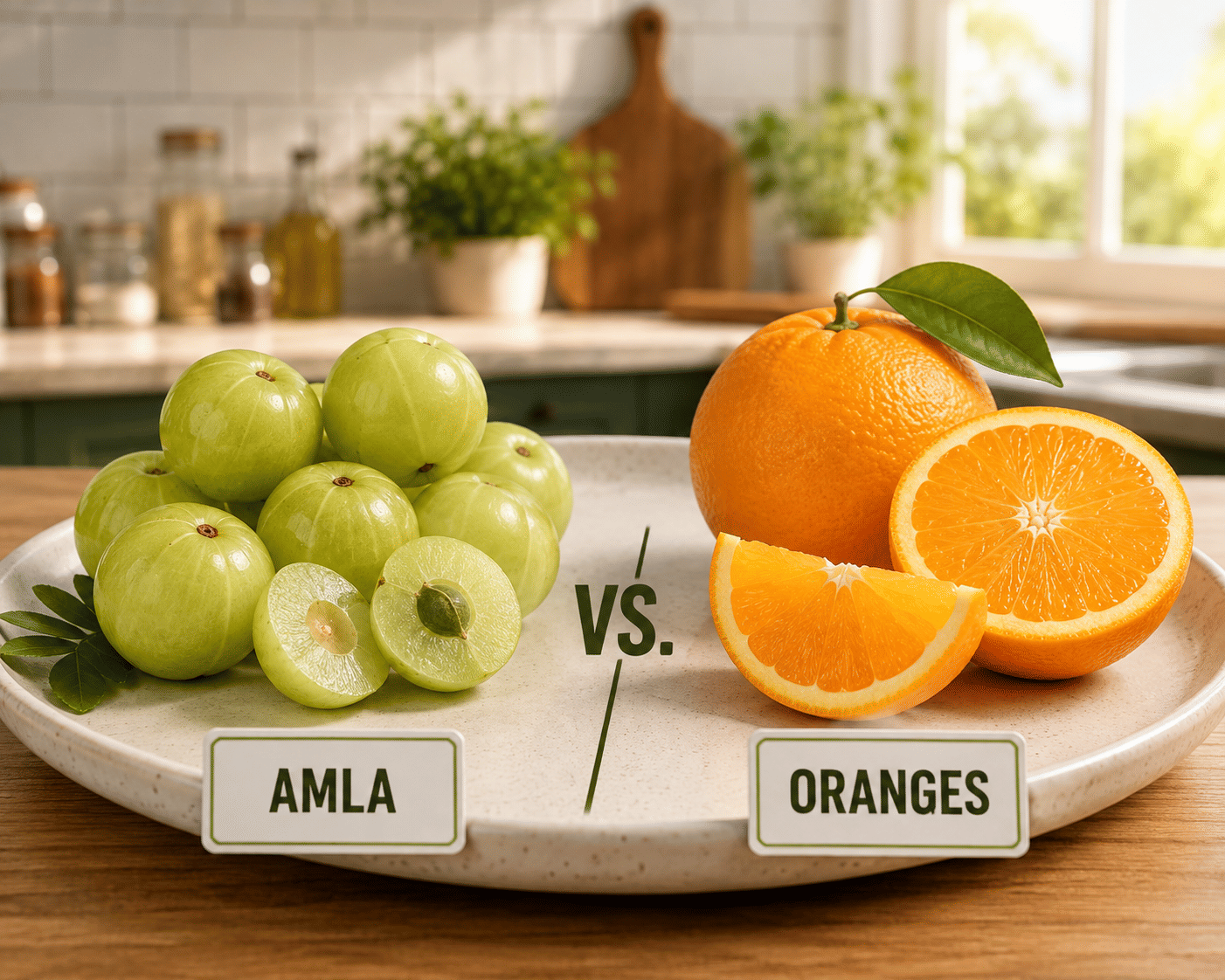
Amla vs Orange: The Real Vitamin C Rankings for Indian Diets
This blog explains what vitamin C really does in the body, how much you actually need, and which Indian foods give you the most of it — spoiler: amla and guava beat oranges by far. It clears up common myths, like the idea that taking huge doses prevents colds, using a simple color-coded myth vs. fact section. It also covers who might need a bit more vitamin C (like smokers), how much is too much, and why food sources are better than relying on serums or supplements alone.

The Calorie Calculator That Finally Understands Indian Food
Most calorie apps aren't built for Indian food — they can't tell you what a katori of dal actually costs you. This post introduces the Indian Food Calorie Calculator, a tool with 600+ Indian foods searchable in real household units (katori, roti, cup), pulling data from INDB, ICMR and USDA sources. It walks through how to use it, breaks down a real thali's calories and protein as an example, and makes the point that knowing your numbers is step one — a personalized plan is step two.
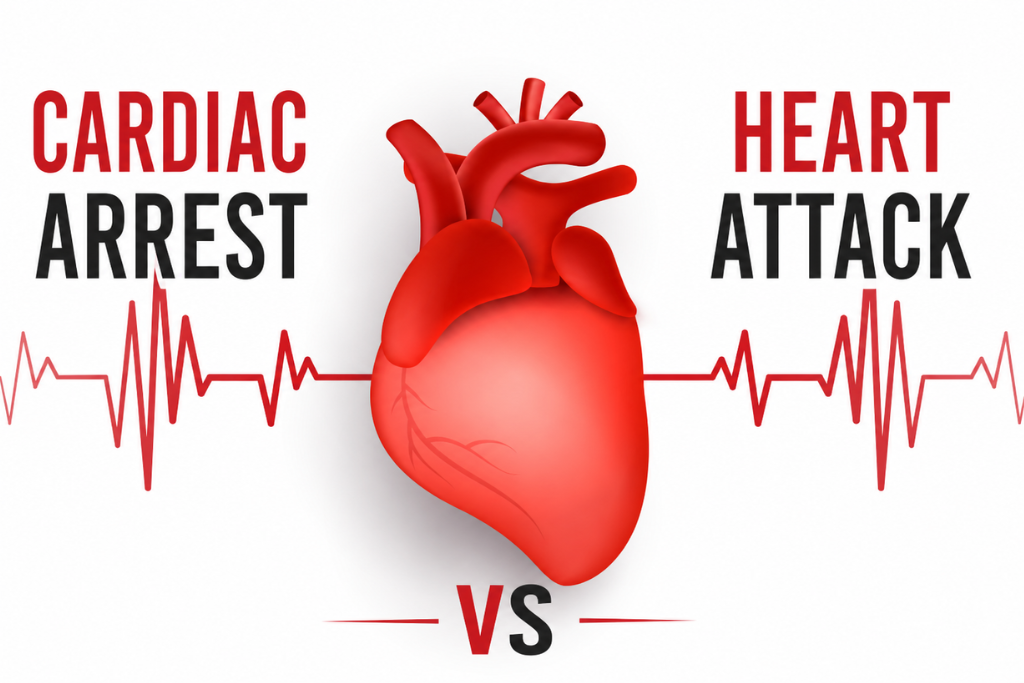
Your Heart Can Fail Two Ways — Here's the Difference
Most people use "heart attack" and "cardiac arrest" as if they mean the same thing — they don't. A heart attack is a circulation problem caused by a blocked artery, while cardiac arrest is an electrical malfunction that stops the heart from beating altogether. This blog breaks down the real difference, how one can trigger the other, and why knowing this could change how you respond in an emergency. It also connects the science back to everyday nutrition and training, showing how consistent diet and exercise habits help protect your heart long-term.
Ready to Start Your Fitness Journey?
Get personalized training and nutrition guidance from Coach Himanshu
Explore Plans