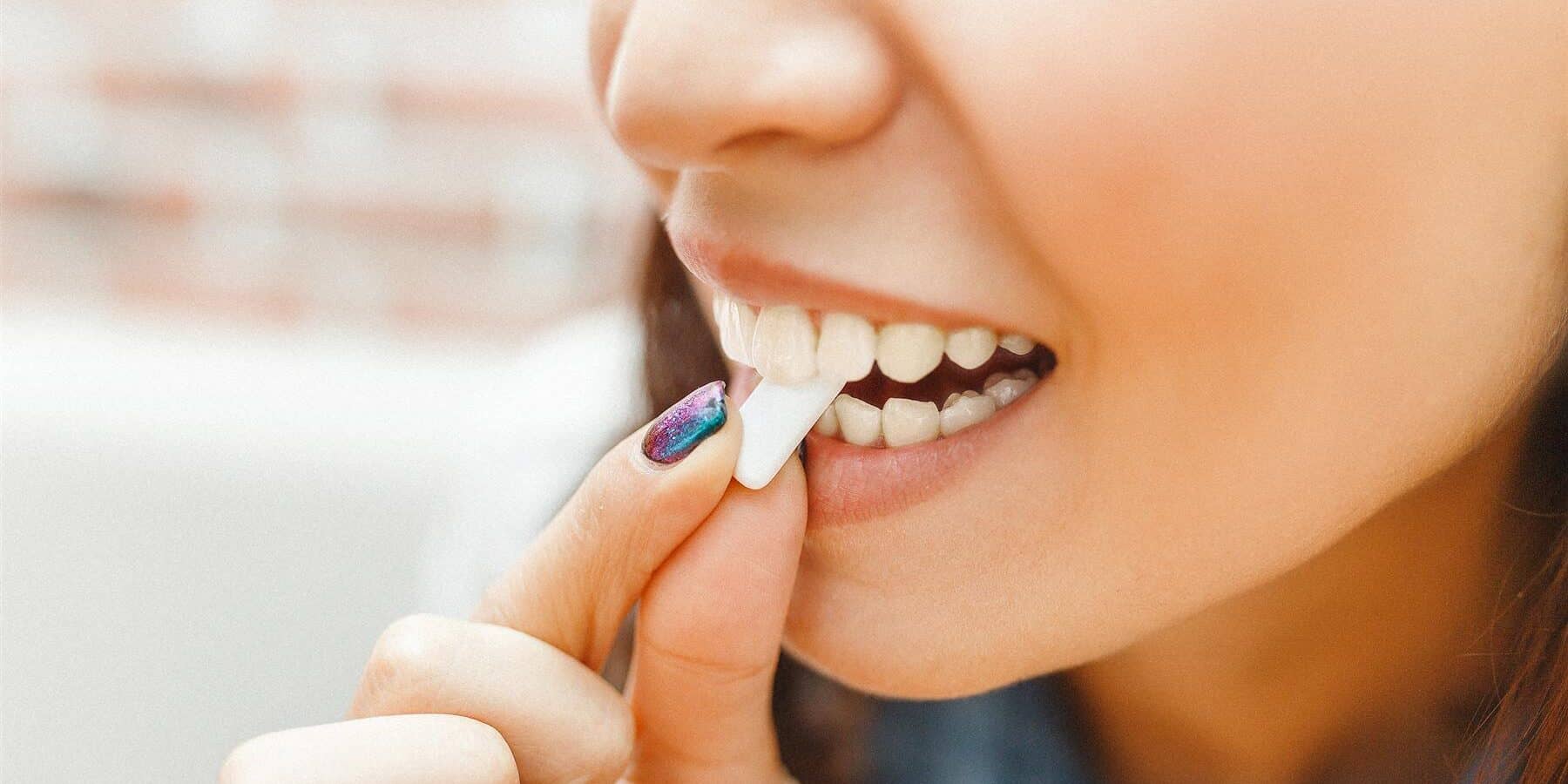
Chewing gum can stimulate saliva production, and your digestive system can start responding before a meal ever arrives. Both statements are true, but they get stretched into claims the research doesn't support. This guide separates the solid science from the hype, and covers the benefits, the risks and the rules for chewing gum smartly.
Claim check: what is actually proven?
| Claim | What the research shows |
|---|
| Gum boosts saliva | Well supported. In a small study of 10 healthy volunteers, chewing gum base roughly doubled salivary flow (about 26 vs 13 mL in 15 minutes). |
| Digestion starts before food arrives | True. This is the "cephalic phase": sight, smell, taste and chewing trigger vagus-nerve responses. In sham-feeding studies, this phase accounts for roughly 20–25% of total pancreatic enzyme secretion. |
| Gum alone switches on strong digestion | Overstated. Those studies mostly use appetising food that is chewed and spat out. Human insulin and gut-hormone responses to sham feeding are inconsistent, and gum's effect on stomach acid in healthy people isn't well established. |
| Gum nudges gut movement | Modestly supported in surgery patients (below), where gum works as a mild form of "sham feeding". |
Bottom line: gum reliably increases saliva and swallowing. It does not digest anything, and it isn't a substitute for food.
The proven benefits
1. Healthier teeth
Saliva neutralises plaque acids and helps remineralise enamel. The European Food Safety Authority accepts that sugar-free gum chewed for about 20 minutes after meals (2–3 g, at least three times a day) reduces tooth-decay risk. Xylitol gum has stronger evidence than most, but only at gram doses; some brands contain very little.
2. Less acid reflux
In 10 healthy volunteers, doubling saliva cut oesophageal acid clearance time from about 6.9 to 2.3 minutes. A separate study found sugar-free gum for 30 minutes after a meal reduced reflux. Evidence is small but consistent; it isn't a replacement for treatment.
3. Faster gut recovery after surgery
A Cochrane review found gum cut time to first flatus by about 10 hours and to first bowel movement by about 12 hours after abdominal surgery (quality of evidence was limited). After caesarean section, about 7 hours earlier to first flatus.
4. Dry mouth relief
Gum stimulates saliva, so it can ease temporary dry mouth, and swallowing frequency rises while you chew.
The downsides most people never hear about
Sugar, bloating and loose stools
Sugared gum feeds cavity bacteria. Sugar alcohols (sorbitol, xylitol, mannitol) can cause gas, bloating and loose stools in large amounts, and people with IBS often react at lower doses. Swallowing air while chewing may add to bloating.
Jaw strain and headaches
Constant chewing overworks the jaw joint. A small 2013 study of 30 young people with chronic headaches who chewed gum daily found 19 had complete relief after quitting for a month. It was small and uncontrolled, but worth trying if you chew heavily.
Microplastics
A 2025 pilot study (presented at the American Chemical Society meeting, one chewer) found both synthetic and natural gums released about 100 microplastic particles per gram on average, up to about 600. Whether this harms health is unknown; it was preliminary, and smaller particles weren't measured.
Sweeteners and sensitivities
Aspartame gums carry a warning for people with phenylketonuria (PKU). Xylitol is toxic to dogs; keep gum away from pets.
Common myths
MYTH — Swallowed gum stays in your stomach for seven years.
FACT — Gum base isn't digested, but it passes through like other indigestible material. Rare blockages are reported mostly in young children who swallow many pieces.
MYTH — Gum replaces brushing.
FACT — It helps between meals but doesn't remove plaque the way brushing and flossing do.
MYTH — Gum burns fat or fills you up.
FACT — Sugar-free gum has only about 5 kcal a piece. Evidence that it reduces appetite is mixed and weak, so don't rely on it for
weight loss.
MYTH — Chewing gum on an empty stomach damages it.
FACT — This is widely claimed but poorly proven. Some people feel acidity or bloating; if you do, chew after meals instead.
How to chew gum smartly
- Pick sugar-free. Check the label for xylitol, sorbitol and aspartame.
- Chew after meals for about 15–20 minutes, then bin it. That's the pattern the dental evidence supports.
- Keep it moderate: a few sessions a day. Stop if your jaw clicks, aches or you get headaches.
- Reflux? Try sugar-free gum after meals. Some sources advise skipping mint flavours, though gum-specific evidence is thin.
- Wrap used gum in paper and bin it. Never swallow it deliberately or give it to young children.
- Dog at home? Keep xylitol gum out of reach.
Who should be careful
- People with IBS or polyol sensitivity (sugar alcohols are common triggers)
- Anyone with jaw pain, clicking or TMJ problems, or frequent headaches
- People with PKU (avoid aspartame gums)
- Young children (choking risk) and people with braces (ask your orthodontist)
See a dentist or doctor for jaw pain that won't settle, persistent heartburn, tooth sensitivity, or long-lasting bloating or diarrhoea.
Small habits like this are only a part of nutrition. If you want a plan built around your goals, start with your calorie numbers, or explore 1:1 online personal training.
Disclaimer: Educational and general, not individualised medical or dental advice. If you have a medical or dental condition, check with your doctor or dentist.
Sources referenced: von Schönfeld et al., Digestion (1997); J Dent Res (2005) on sugar-free gum and reflux; Short et al., Cochrane review (2015) and Cochrane caesarean-section review (2016) on gum and gut recovery; EFSA opinion on sugar-free gum and tooth decay (2010); Watemberg et al., Pediatric Neurology (2013); Mohanty and Lowe, ACS Spring 2025 pilot study on gum microplastics; Pancreapedia review on regulation of pancreatic secretion; Gut review on the cephalic phase of gastric acid secretion.