Amla vs Orange: The Real Vitamin C Rankings for Indian Diets
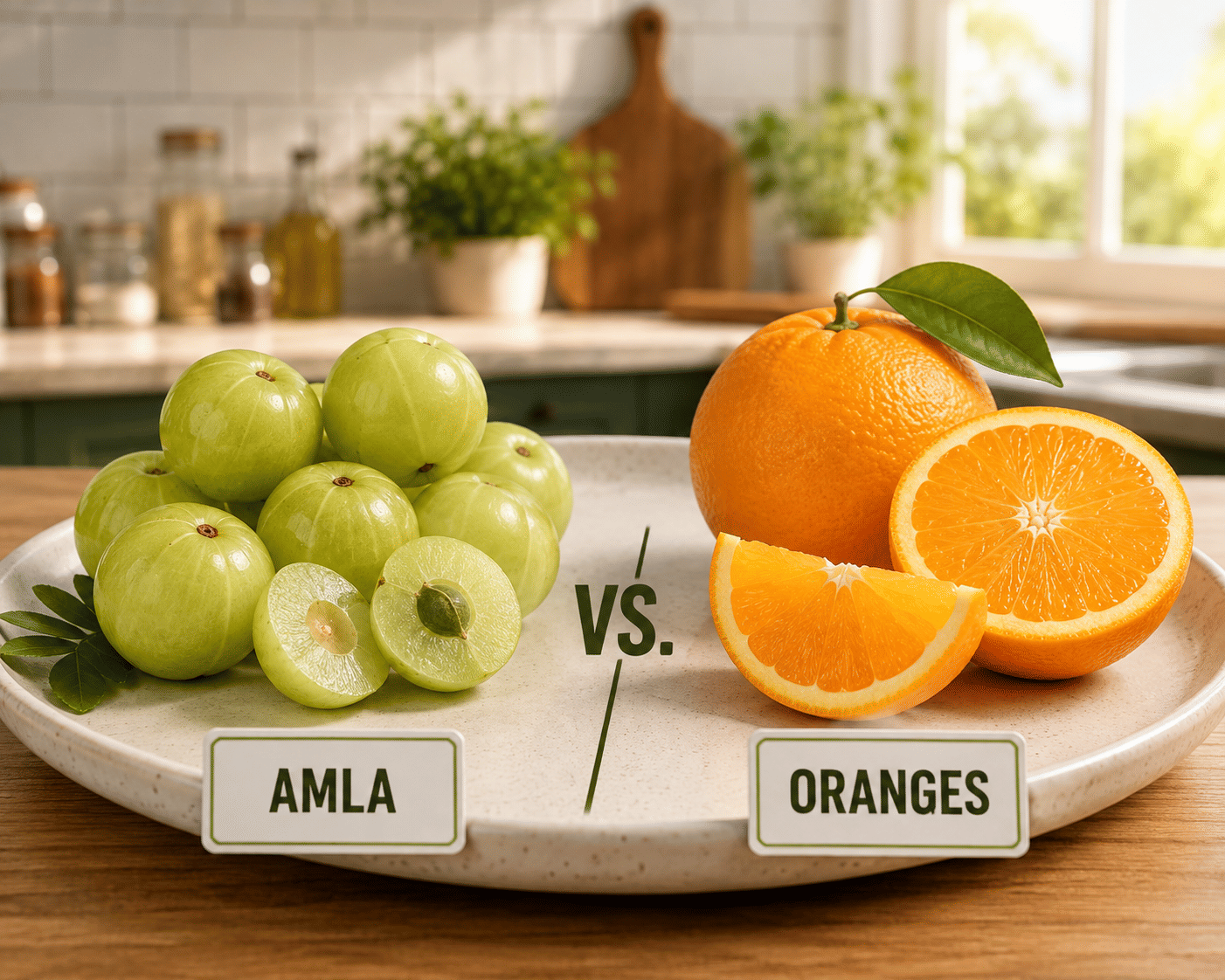
Vitamin C in Indian Food: Real Sources, RDA & the Megadose Myth
One amla beats a bowl of oranges. A 1000mg tablet won't stop your next cold. Here's the actual data.
Vitamin C has one of the widest gaps between reputation and reality of any nutrient. It gets credited with curing colds, and blamed for being "destroyed" the second food touches heat — neither is quite true. What it actually does is well established, and once you know that, picking the right foods for it becomes simple. Track your intake alongside the rest of your plate using the Indian Food Calorie Calculator, which also lists micronutrients like vitamin C for 850+ foods.
What vitamin C actually does in the body
- Collagen synthesis — required to make and stabilise collagen, which is why deficiency shows up first in skin, gums and joints
- Antioxidant defence — neutralises free radicals and helps regenerate vitamin E
- Non-heme iron absorption — significantly improves how much iron your body absorbs from plant sources like dal, rajma and palak when eaten in the same meal
- Immune function support — supports normal immune cell activity, which is different from "preventing" infection
How much you actually need
The ICMR-NIN RDA for adults is around 40 mg/day — far lower than the 500–1000 mg doses sold in supplement bottles. Vitamin C is water-soluble, so the body doesn't store large excess amounts; beyond a certain intake, most of it is simply excreted rather than "boosting" anything further. For most people eating any regular fruit or vegetable each day, hitting the RDA from food alone is not difficult.
Best Indian food sources, ranked
Forget the assumption that citrus is the top source — several everyday Indian foods beat oranges by a wide margin.
| Food | Vitamin C per 100g | Notes |
|---|---|---|
| Amla (Indian gooseberry) | ~500–600 mg | Varies by cultivar/region; one small amla alone can exceed the full-day RDA |
| Guava | ~228 mg | Widely available, inexpensive, eaten raw as a snack across India |
| Red bell pepper (capsicum) | ~128 mg | Roughly 2–3x an orange for the same weight |
| Orange | ~53 mg | The "default" reference food, but not the strongest source |
| Lemon (juice) | ~30–50 mg | Useful in small amounts, not a standalone source at typical serving sizes |
Practical takeaway: a fresh amla, a katori of guava, or capsicum stir-fried into a sabzi will out-perform a glass of orange juice for the same or fewer calories.
Myth vs fact
Who actually needs more than the baseline
- Smokers — oxidative stress from smoking increases turnover, so international guidelines suggest roughly 35 mg/day above the standard RDA
- People with limited fruit/vegetable intake — the most common real-world cause of low vitamin C status isn't a rare disease, it's simply not eating enough produce
- Post-surgery or wound-healing recovery — since vitamin C is directly required for collagen formation, needs can rise temporarily during tissue repair
- Malabsorption conditions — certain gut conditions reduce how efficiently vitamin C (and other nutrients) are absorbed from food
None of these groups need to jump to gram-level megadoses — a consistent, food-first intake a little above the baseline RDA covers most of this.
How much is too much
Vitamin C is one of the safer nutrients to get slightly wrong, but it isn't limitless. The commonly cited Tolerable Upper Intake Level sits around 2,000 mg/day for adults — well beyond what any realistic diet provides, and only reachable through concentrated supplements. Crossing it regularly is mainly associated with gastrointestinal upset — nausea, cramping, diarrhoea — rather than anything more serious for most healthy adults. People prone to kidney stones are sometimes advised to be more cautious with high-dose supplementation specifically, which is worth a conversation with a doctor rather than a default assumption either way.
Vitamin C and skin: separating the real link from the marketing
Topical vitamin C serums are heavily marketed for "glowing skin," and there is a real mechanism behind it — vitamin C is a genuine cofactor in collagen synthesis, and collagen is what keeps skin firm. But the stronger, better-evidenced lever is dietary sufficiency, not a serum layered on top of an otherwise low-vitamin-C diet. If intake from food is already adequate, a topical product is working with a body that already has what it needs to make use of it; it isn't a substitute for that baseline.
Signs of low intake
True vitamin C deficiency (scurvy) is rare where any fruit or vegetable is regularly eaten, but milder inadequacy can show up as slow wound healing, bleeding gums, easy bruising or persistent fatigue. If you're seeing these signs, that's a conversation for a doctor, not a supplement aisle decision — get it checked before assuming it's diet.
Sources referenced: Indian Food Composition Tables 2017 (ICMR-NIN), Indian Nutrient Databank (INDB), USDA FoodData Central, and Cochrane systematic review data on vitamin C and the common cold.
Know your micronutrients, not just your calories
A free assessment turns numbers like these into an actual Indian diet and workout plan built around your body, routine and goal.
Related Articles
The Calorie Calculator That Finally Understands Indian Food
Most calorie apps aren't built for Indian food — they can't tell you what a katori of dal actually costs you. This post introduces the Indian Food Calorie Calculator, a tool with 600+ Indian foods searchable in real household units (katori, roti, cup), pulling data from INDB, ICMR and USDA sources. It walks through how to use it, breaks down a real thali's calories and protein as an example, and makes the point that knowing your numbers is step one — a personalized plan is step two.
Your Heart Can Fail Two Ways — Here's the Difference
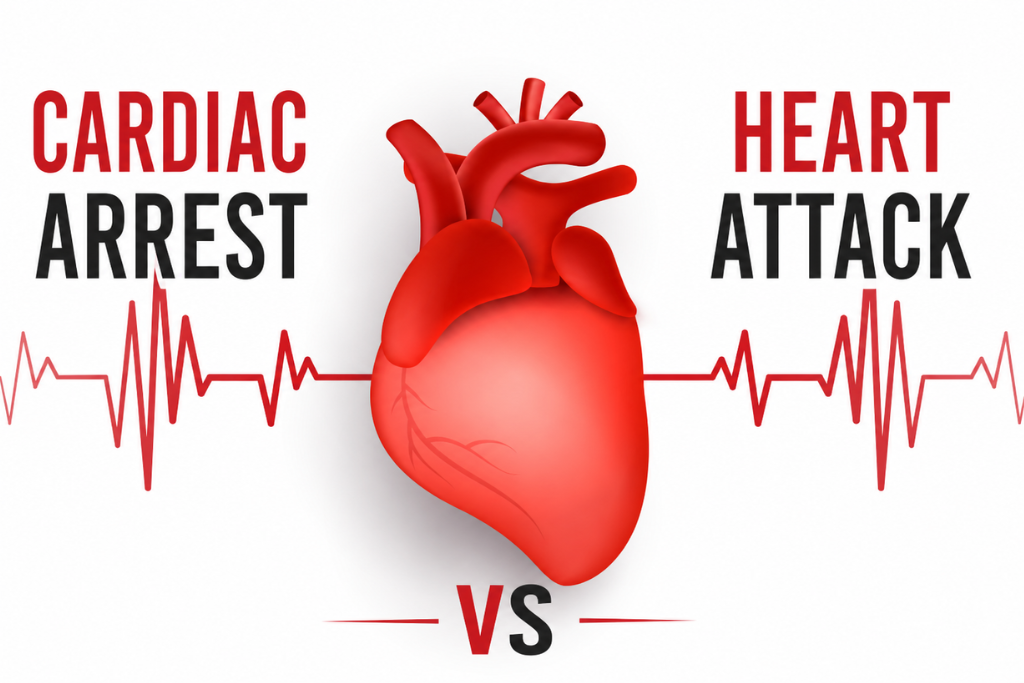
Most people use "heart attack" and "cardiac arrest" as if they mean the same thing — they don't. A heart attack is a circulation problem caused by a blocked artery, while cardiac arrest is an electrical malfunction that stops the heart from beating altogether. This blog breaks down the real difference, how one can trigger the other, and why knowing this could change how you respond in an emergency. It also connects the science back to everyday nutrition and training, showing how consistent diet and exercise habits help protect your heart long-term.

Muscle Confusion Is a Myth: Why Progressive Overload Actually Builds Muscle
Muscles respond to mechanical tension, training volume, and progressive overload—not novelty or being “shocked.” Progressive overload means gradually increasing weight, reps, sets, or improving performance over time. Constantly changing exercises can make it harder to track progress and improve technique. Exercise variation still has a place for managing joint stress, breaking genuine plateaus, and improving adherence. The key is simple: follow a structured program, track your progress, and progressively make training harder.
Ready to Start Your Fitness Journey?
Get personalized training and nutrition guidance from Coach Himanshu
Explore Plans