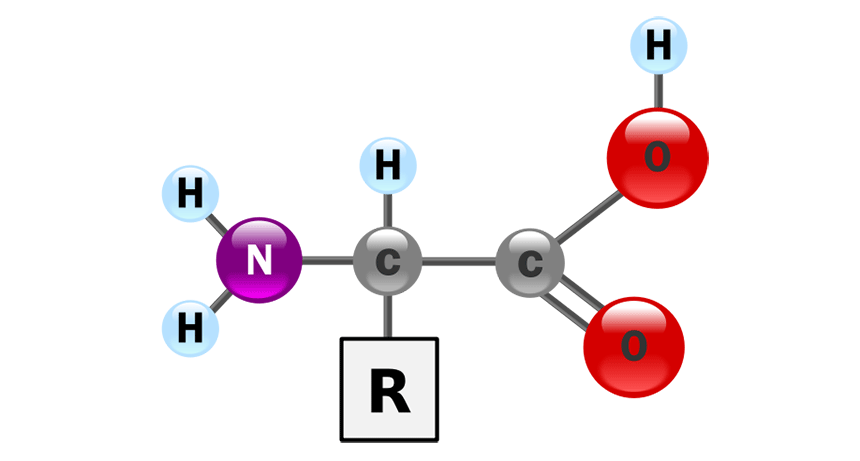
Amino Acids — The Real Building Blocks of Your Body
Most people think protein is only important for muscle building. But what they fail to understand is that protein itself is made of smaller compounds called amino acids — and these amino acids are involved in almost every major biological process inside the human body.
Your muscles, hormones, enzymes, neurotransmitters, immune cells, skin, hair, recovery systems, and even brain function depend on amino acids. Without them, your body cannot efficiently repair, grow, recover, or function properly.
Most people only hear “hit your protein intake,” but very few actually understand the science behind what protein really does inside the body. So let’s break down amino acids properly.
1️⃣ What Are Amino Acids?
Amino acids are organic compounds that combine together to form proteins. They are often called the “building blocks of life” because nearly every structural and functional protein inside your body is made from different combinations of amino acids.
When you eat protein-rich foods such as eggs, chicken, fish, dairy, meat, or plant proteins, your digestive system breaks those proteins down into amino acids. These amino acids are then absorbed into the bloodstream and used for various physiological functions.
Your body does not directly use “chicken” or “eggs” to build muscle. It uses the amino acids obtained from those foods.
2️⃣ Types of Amino Acids
There are 20 primary amino acids used by the human body, and they are categorized based on whether your body can produce them internally or not.
Essential amino acids cannot be synthesized by the body and must come from food. These include leucine, isoleucine, valine, lysine, methionine, and tryptophan. These amino acids are critical because without them, protein synthesis becomes limited.
Leucine is especially important because it activates the mTOR pathway, which plays a major role in muscle protein synthesis. This is one reason why high-quality proteins like eggs, dairy, fish, chicken, and whey protein are considered superior for muscle growth.
Non-essential amino acids can be produced by the body itself. Even though they are termed “non-essential,” they still play extremely important roles in metabolism, recovery, neurotransmitter production, and energy systems.
Conditionally essential amino acids are normally produced by the body, but during periods of stress, illness, injury, or intense training, the body’s demand may exceed production capacity. Examples include glutamine and arginine.
3️⃣ Amino Acids & Muscle Growth
Muscle protein synthesis is the process through which the body repairs and builds muscle tissue after training. Resistance training creates microscopic muscle damage, and amino acids provide the raw materials necessary to repair and strengthen that tissue.
Without adequate amino acid availability, recovery becomes slower, muscle growth decreases, performance declines, and injury risk increases. Leucine plays a particularly important role because it acts as a trigger for muscle protein synthesis.
This is why protein quality matters — not just total protein quantity.
4️⃣ Amino Acids & Brain Function
Amino acids are heavily involved in neurotransmitter production. Tryptophan contributes to serotonin production, while tyrosine helps produce dopamine and norepinephrine. Glutamate itself acts as an excitatory neurotransmitter inside the nervous system.
This means amino acid intake can influence mood, focus, motivation, stress response, and cognitive performance. Poor nutrition does not only affect your muscles — it affects your brain chemistry too.
5️⃣ Amino Acids & Recovery
Recovery is not limited to muscles alone. Your immune system, connective tissues, enzymes, hormones, and cells constantly require amino acids for repair and maintenance.
Collagen synthesis depends heavily on amino acids such as glycine and proline. Immune cells also require amino acids for optimal function. Severe protein deficiency can therefore lead to muscle wasting, weak immunity, fatigue, poor healing, and reduced physical performance.
When amino acid availability becomes too low, the body essentially starts breaking itself down.
6️⃣ BCAAs vs EAAs — Which Is Better?
BCAAs contain three amino acids: leucine, isoleucine, and valine. While these are important, muscle protein synthesis requires all essential amino acids — not just three.
EAAs are generally superior because they provide the complete amino acid profile necessary for efficient protein synthesis. In many cases, if your total daily protein intake is already sufficient, additional BCAA supplementation may not provide significant benefits.
Good nutrition often matters more than supplement marketing.
7️⃣ Best Sources of Amino Acids
High-quality complete protein sources include eggs, chicken, fish, dairy, whey protein, and meat. These contain all essential amino acids in highly bioavailable forms.
Plant proteins can also support amino acid intake, but some plant sources may lack certain essential amino acids. Combining different plant protein sources can improve amino acid balance.
Eggs are considered one of the highest-quality protein sources because they contain all essential amino acids with excellent bioavailability.
8️⃣ Signs of Low Amino Acid Intake
Low protein or amino acid intake may contribute to poor recovery, fatigue, low muscle mass, weak immunity, slow healing, increased hunger, poor hair and skin quality, and reduced performance.
Your body constantly requires amino acids. This is not just a bodybuilding topic — it is basic human physiology.
“Your body is built from what you consistently feed it. Recovery, performance, muscle growth, immunity, and even brain function begin at the cellular level.”
🏁 Final Words from Coach Himanshu
Amino acids are not “gym science” — they are life science. Every heartbeat, every muscle contraction, every hormone, and every recovery process inside your body depends on them.
People often obsess over supplements while ignoring the real foundation: adequate high-quality protein intake. If you consistently provide your body with proper nutrition, it adapts positively. If you consistently underfeed recovery and protein intake, the body slowly loses efficiency over time.
Muscles, recovery, performance, immunity, metabolism, and brain function all begin at the cellular level — and amino acids are one of the most important parts of that system.